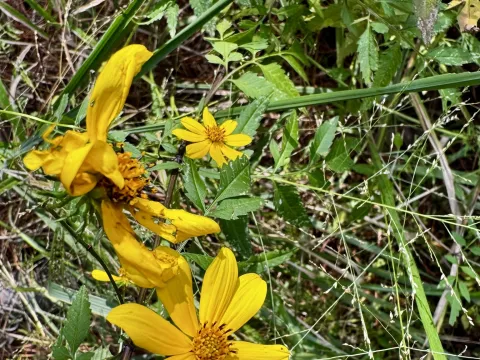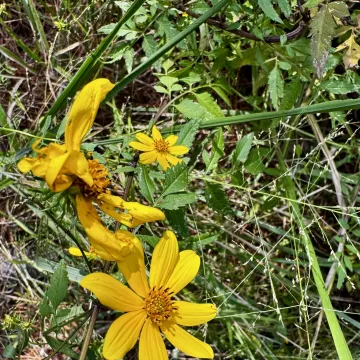
Bearded beggarticks
Bidens aristosa
Description
Bearded beggarticks (Bidens aristosa) is an annual herbaceous plant belonging to the Asteraceae family. Known for its distinct, daisy-like yellow flowers, this species is increasingly utilized in landscaping and restoration projects, moving beyond its wild origin to managed garden settings.
The plant originates from North America, where it typically inhabits wetlands, floodplains, and disturbed sites. Its natural ability to thrive in damp environments and its rapid growth cycle have made it an interesting subject for specialists focusing on naturalistic planting designs and ecological restoration.
Botanically, Bidens aristosa features a branched, upright stem with pinnately divided leaves. The golden-yellow flower heads typically bloom in late summer and autumn. The seed dispersal is aided by barbed awns attached to the achenes, which can cling to clothing or animal fur, assisting in natural expansion.
Agricultural requirements for this crop include full sun exposure and consistently moist soil. While it is quite adaptable, the best performance in terms of height and flower production is achieved in fertile, loamy soils with adequate moisture management. It is largely resistant to common agricultural pests but requires monitoring in dense plantings to prevent fungal issues related to poor air circulation.
- Thrives in full sun and wet soil conditions.
- Excellent as a pollinator-friendly plant.
- Rapid biomass production.
- Low maintenance compared to other ornamental species.
In terms of хозяйственное usage, it is primarily grown for its ornamental value in wild-style gardens and as a supportive species for beneficial insects. By providing high-quality nectar, Bidens aristosa plays a crucial role in integrated pest management strategies, as it supports populations of native pollinators and predatory insects on agricultural lands.
Photo gallery