Leafy beggarticks
Bidens radiata
Description
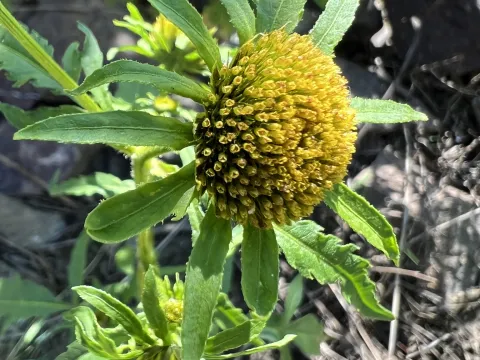
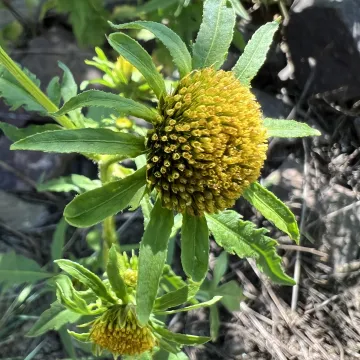
Leafy beggarticks (Bidens radiata) is an annual herbaceous plant belonging to the Asteraceae family. While primarily categorized as a weed within agricultural landscapes, this species exhibits remarkable adaptability and specific physiological traits that define its role in various ecosystems and its impact on crop production.
The plant is native to temperate regions of Eurasia and is typically found in wet, moisture-rich environments. Common habitats include the margins of water bodies, marshy grasslands, and low-lying damp areas. In an agricultural context, it often colonizes poorly drained fields, establishing itself as a competitor for water and soil nutrients.
Botanically, Bidens radiata is characterized by an erect, branched stem and opposite, serrated leaves. Its yellow flower heads are surrounded by distinctively elongated bracts, which provide the plant with its common and scientific names. The seeds, or achenes, are equipped with barbed bristles that allow for efficient dispersal by attaching to animals, equipment, and clothing.
From an agronomic perspective, managing leafy beggarticks requires an integrated approach. Essential techniques include improving soil drainage to reduce the damp conditions the plant prefers, implementing strict crop rotation, and performing mechanical weed control during early developmental stages. Chemical control can also be effective using specific broadleaf herbicide formulations.
Despite its status as a weed, Bidens radiata possesses chemical compounds, such as flavonoids and tannins, which are traditionally valued in medicinal and cosmetic applications. However, within farming systems, the priority remains the prevention of seed set and the containment of its spread to protect yield potential and ensure the quality of harvestable crops.
Photo gallery