
Bifora dicocca
Bifora dicocca
Description
Bifora dicocca is an annual herbaceous plant belonging to the Apiaceae (formerly Umbelliferae) family. Within agricultural practice, it is recognized as an essential oil-bearing and culinary aromatic plant, known for its distinctive scent which is often compared to that of coriander.
The plant originates from the Mediterranean basin and Western Asia. Its natural range extends through Southern Europe, the Caucasus, and the Middle East. While not a mainstream industrial crop, it is cultivated in specific regions for its aromatic seeds and volatile oils, often serving as a niche crop in medicinal or culinary herb production.
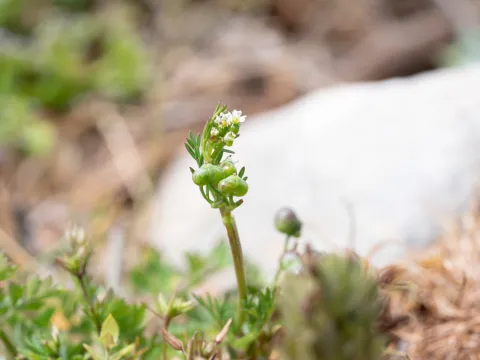
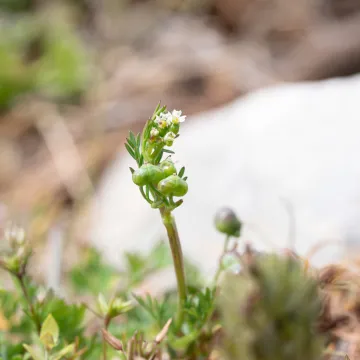
Botanically, it features an erect stem reaching heights of 20 to 50 centimeters, characterized by finely divided, fern-like leaves. It produces small, white flowers clustered in typical umbel inflorescences during the late spring and early summer. Its fruit is a schizocarp that splits into two separate mericarps, which is a key diagnostic feature of the species.
The cultivation of Bifora dicocca requires a sunny environment and well-drained, fertile soil. It is well-adapted to Mediterranean-type climates, preferring moderate temperatures and low humidity during the seed maturation phase. Agronomic practices typically involve early spring sowing, precise moisture management to prevent root rot, and mechanical weeding in the inter-row spaces.
The primary economic value of the plant lies in its essential oils, which have applications in the flavoring and pharmaceutical industries. Furthermore, the seeds are utilized in traditional cooking as a spice. Regarding plant protection, producers must be vigilant against fungal diseases such as powdery mildew, especially in regions with high precipitation, and common pests like aphids that target the foliage.
Photo gallery