Rayless goldenrod
Bigelowia viscidiflora
Description
Rayless goldenrod (Bigelowia viscidiflora) is a perennial herbaceous plant belonging to the Asteraceae family. It is a highly specialized species adapted to harsh, arid environments, making it a subject of interest for sustainable agriculture and land restoration in dry regions.
Native to the western parts of North America, this plant is naturally distributed across arid rangelands, rocky outcrops, and open meadows. Its natural habitat dictates its evolutionary development, resulting in a culture that thrives where more sensitive crops would struggle to survive.
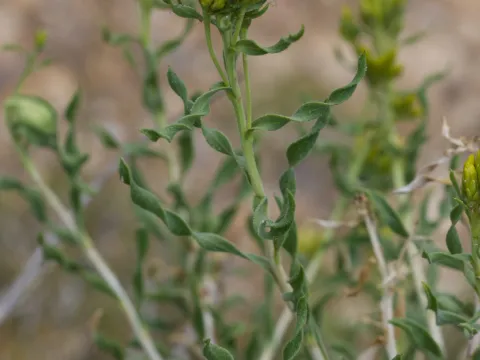
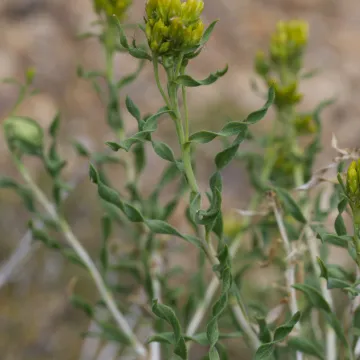
Botanically, the plant features a semi-shrubby growth habit with narrow, glandular leaves that often appear sticky or resinous, an adaptation to reduce transpiration. The plant produces dense clusters of bright yellow flower heads during the late summer and fall seasons, supported by a deep, drought-resistant taproot system.
Cultivation requirements for successful establishment include:
- well-drained, porous soil conditions;
- full exposure to direct sunlight;
- minimal irrigation once the plant is established;
- tolerance to poor, rocky, or saline soil substrates.
In terms of agricultural and landscape usage, the plant is valued for xeriscaping and soil stabilization. It is generally resistant to most insect pests, although standing water or poor drainage can lead to root rot issues. Proper management of soil moisture is the most critical factor for maintaining the health and longevity of this resilient species.
Photo gallery