Biophytum sensitivum
Biophytum sensitivum DC.
Description
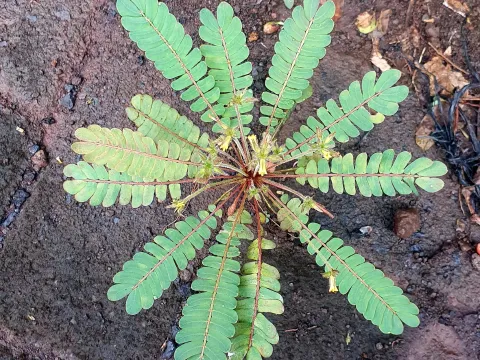
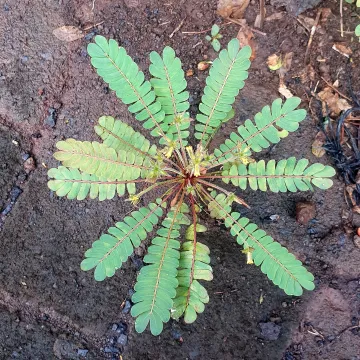
Biophytum sensitivum is a small, herbaceous perennial plant belonging to the Oxalidaceae family. Often referred to as the "sensitive plant" due to its distinct thigmonastic behavior, its feathery, compound leaves fold inward immediately upon physical contact or exposure to sudden light changes, simulating the movement of a miniature palm tree.
The plant originates from tropical regions across Asia, Africa, and Madagascar. In its native habitat, it thrives in moist, shaded environments, such as forest floors and humid stone crevices. Its ornamental appeal and unique physiological sensitivity have made it a popular choice for indoor collectors and enthusiasts of exotic greenhouse botany.
Botanically, the plant features a single, erect stem topped by a terminal rosette of leaves. It produces small, yellow or white flowers arranged in umbels. The reproductive cycle is particularly efficient; upon maturation, the fruit pods undergo dehiscence, explosively scattering seeds to ensure propagation in the surrounding undergrowth.
Agrotechnical requirements focus on maintaining high ambient humidity and stable temperatures ranging from 20°C to 28°C. A well-draining, nutrient-rich, and slightly acidic substrate is essential for healthy development. The plant demands bright, indirect sunlight; direct exposure can lead to leaf scorching, while poor drainage can cause rapid root rot.
Beyond its horticultural value, Biophytum sensitivum is recognized for its pharmacological properties. Traditional medicine practitioners use extracts from the plant for its reported anti-inflammatory, antimicrobial, and diuretic effects. Typical pests include spider mites and mealybugs, which must be controlled through appropriate monitoring and sanitation to prevent infestation.
Photo gallery