Bischofia javanica
Bischofia javanica
Description
Bischofia javanica, commonly known as Bishop wood, is a fast-growing tree belonging to the Phyllanthaceae family. This species is highly regarded in tropical forestry for its rapid biomass production and its significant role in reforestation projects. In its natural habitat, it forms dense canopies and can reach impressive heights, serving as a pillar of the local ecosystem.
The tree is native to a broad range of regions, including tropical Asia, China, and Australia. It thrives in humid environments and is typically found in lowland tropical forests, riverbanks, and valleys. Because of its wide distribution, it has adapted to various climatic conditions within the tropics, although it remains sensitive to prolonged frost or extreme cold.
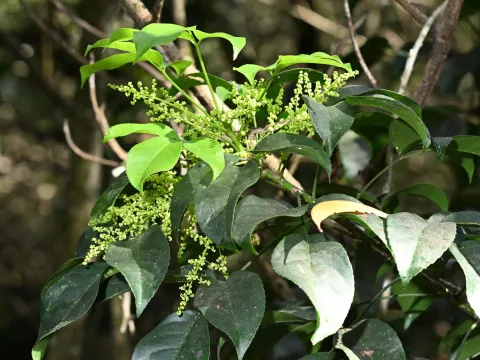
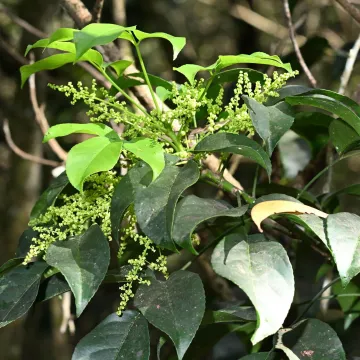
Botanically, Bischofia javanica is characterized by its trifoliate, alternate leaves and small, inconspicuous flowers. The fruits are succulent, berry-like capsules that are crucial for dispersing seeds via avian populations. The tree has a vigorous root system, which not only provides structural support but also plays a key role in preventing soil erosion in sloping terrains.
Cultivation requires specific conditions to achieve maximum yield. The tree prefers deep, fertile, and well-drained soils. While it is known for its tolerance to various soil types, it performs best in moisture-retentive areas. Regular silvicultural management, including thinning and pruning, is recommended during the early stages of growth to ensure a straight trunk and a healthy branch structure.
The tree has diverse commercial and ecological applications:
- Timber production, utilized in general construction, joinery, and furniture making.
- Bark extraction, which yields tannins used in the leather industry and natural dyes.
- Urban landscaping, providing dense shade in large parks and along public avenues.
- Soil stabilization and watershed protection due to its extensive root development.
Like any agricultural crop, it is susceptible to specific pressures. Fungal diseases, particularly root rots, can occur in poorly drained waterlogged soils. Insect pests, such as defoliators, may occasionally impact growth rates. Implementing an integrated pest management strategy and ensuring proper site selection are vital for maintaining the health and longevity of the plantation.
Photo gallery