
Smooth buckler-mustard
Biscutella laevigata
Description
Smooth buckler-mustard (lat. Biscutella laevigata) is a perennial herbaceous plant belonging to the Brassicaceae family. It is widely recognized as an alpine species adapted to harsh, mountainous environments and rocky, nutrient-poor substrates. While not a conventional agricultural crop, it is highly regarded in horticulture for its resilience and unique aesthetic appeal in specialized landscape designs.
The plant originates from the mountain ranges of Central and Southern Europe, including the Alps and Pyrenees. Its native habitat consists of sunny, well-drained slopes with calcareous soils. In cultivation, it is primarily found in rock gardens and botanical collections, where it thrives in conditions that mimic its wild mountain origin, requiring minimal maintenance once established.
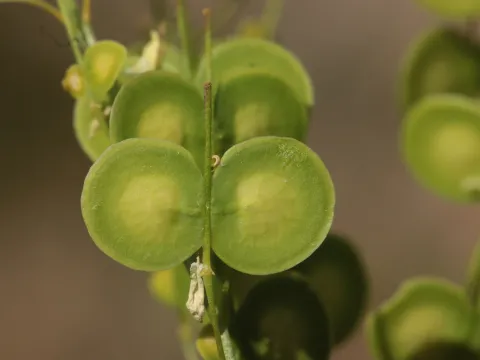
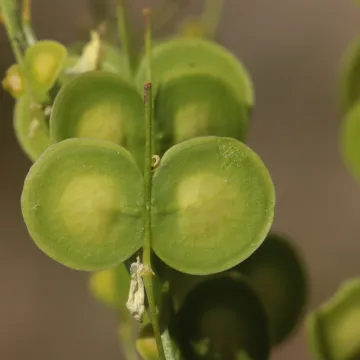
Botanically, the species is characterized by its basal rosette of leaves and branched, slender stems reaching up to 50 cm in height. The inflorescences consist of small, bright yellow four-petaled flowers that bloom in early summer. The plant's common name derives from its peculiar fruit—a two-parted, shield-like capsule that splits upon maturity to release seeds.
Successful cultivation requires attention to the soil profile and moisture management. The plant demands excellent drainage, as it is susceptible to root rot in waterlogged conditions. It prefers a neutral to alkaline soil pH and requires full sun to maintain a compact growth habit. Regular weeding is necessary during the early stages of development to prevent competition from more aggressive weeds.
From an agricultural standpoint, it serves as an ornamental groundcover or an accent plant for xeriscaping. It acts as an important source of nectar for local pollinators. The plant is relatively resistant to common pests, although it may be susceptible to cruciferous beetles (flea beetles) during the spring growth phase and various fungal pathogens if kept in stagnant, overly humid conditions.
Photo gallery