Himalayan fleece flower
Bistorta vacciniifolia
Description
Himalayan fleece flower (Bistorta vacciniifolia) is a perennial herbaceous plant belonging to the Polygonaceae family. It is widely recognized as an excellent ground cover species, prized for its vigorous, mat-forming growth habit and long-lasting late-season floral display.
The species originates from the high-altitude regions of the Himalayas. Due to its adaptation to montane environments, it thrives in cool, temperate climates and is highly regarded in horticulture for its ability to stabilize slopes and provide aesthetic value in rock gardens and front-border plantings.
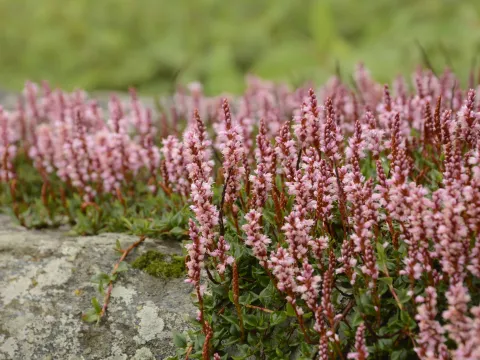
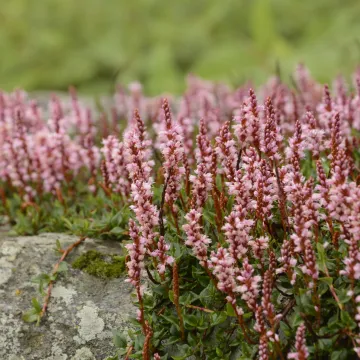
Botanically, it is characterized by woody stems that creep along the ground, rooting at the nodes to form dense carpets. The foliage consists of small, leathery, elliptic leaves that resemble those of a lingonberry. The plant produces distinctive, erect racemes of rose-pink flowers that rise above the mat, typically blooming from late summer through early autumn.
Regarding cultivation, the Himalayan fleece flower requires well-drained, fertile soil that remains consistently moist. It performs best in full sun to partial shade. As an alpine-derived plant, it exhibits good cold hardiness, although it benefits from protection in areas with harsh, exposed winter conditions. Proper drainage is essential to prevent root rot during dormant months.
In terms of plant health, it is generally resistant to major pests and diseases. Agricultural maintenance is minimal, primarily involving occasional pruning to manage spread and division of the root clumps every few years to maintain plant vigor. This makes it a low-maintenance selection for both residential and commercial landscaping projects.
Photo gallery