Eremophila glabra
Eremophila glabra (R. Br.) Ostenf.
Description
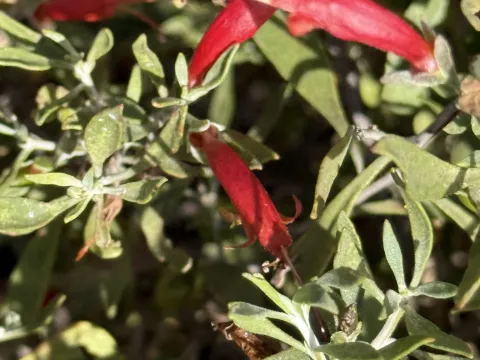
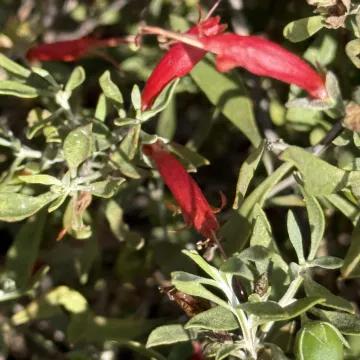
Eremophila glabra, widely known as the black fuchsia, is a diverse shrub species within the Scrophulariaceae family. Its common name reflects its unique flower shape and the tendency for some varieties to produce dark-colored foliage or fruit. This plant is highly prized for its versatility, ranging from prostrate ground-hugging forms to upright shrubs that can reach significant heights.
Originating from the arid and semi-arid zones of Australia, this species has developed remarkable survival strategies for harsh environments. It is naturally adapted to survive in areas with low rainfall and extreme heat, making it an excellent candidate for xeriscaping in similar climates around the world. It serves as a vital resource for native fauna, particularly honeyeater birds that rely on its nectar-rich flowers.
Botanically, Eremophila glabra displays significant variability in leaf texture, which can be glabrous (smooth) or covered in fine hairs to prevent water loss. The tubular flowers are a focal point, appearing in shades of yellow, orange, red, or deep brownish-green. The bloom period typically occurs throughout the cooler months, providing color to the landscape when most other plants are dormant.
To successfully cultivate this crop, soil drainage is the most critical factor. Eremophila glabra thrives in well-draining, sandy or loamy soils with a neutral pH. In garden settings, planting in elevated beds is recommended to prevent root rot, which is the most common cause of plant failure. Full sun exposure is essential; lack of light will result in leggy growth and a substantial reduction in flowering density.
Agricultural and gardening maintenance is relatively simple, as the plant is exceptionally hardy once established. Occasional pruning is recommended after flowering to maintain a compact shape and encourage denser growth. While generally pest-resistant, growers should monitor for scale insects and aphids, particularly in poorly ventilated areas. By providing correct drainage and minimal water, the black fuchsia will remain a healthy and long-lived feature of the landscape.
Photo gallery