
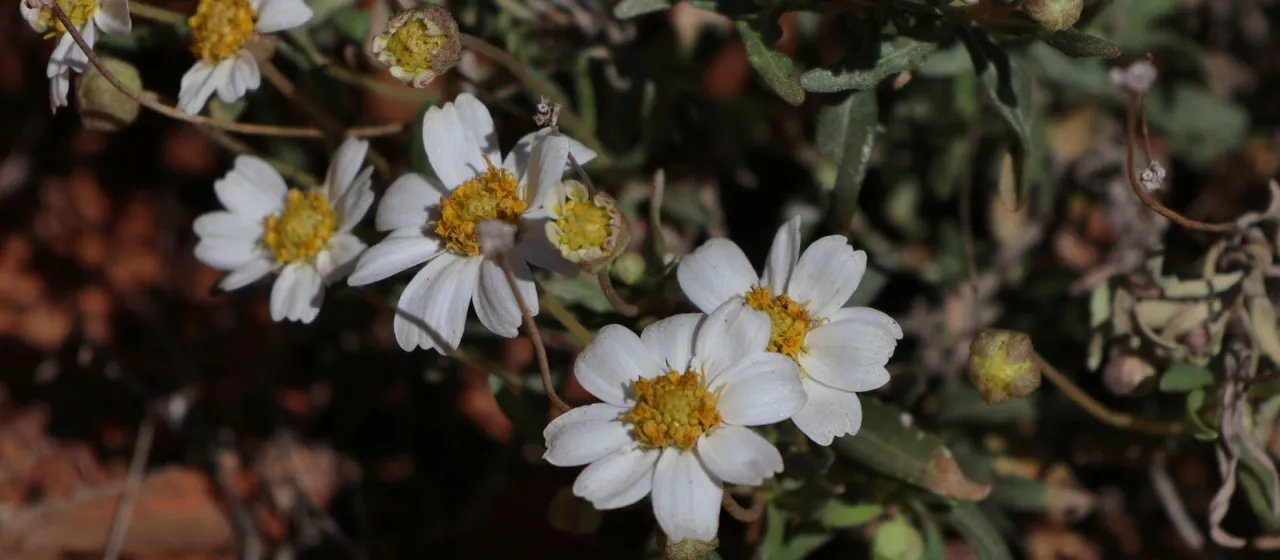
Description
Blackfoot daisy (Melampodium leucanthum) is a resilient perennial wildflower belonging to the Asteraceae family. Known for its compact habit and prolific flowering, this plant is highly valued in horticulture for its exceptional tolerance to heat and arid growing conditions.
The native range of this species spans the southwestern United States and northern Mexico. It is typically found thriving in dry, rocky, and limestone-based soils. Due to its evolutionary history, the plant is perfectly adapted to environments where water is scarce and sunlight is intense throughout the growing season.
Botanically, the plant grows as a small, mounded subshrub, typically reaching 8 to 16 inches in height. It features narrow, soft-textured leaves and produces numerous daisy-like flowers with white ray florets and yellow disk centers. These blooms provide a long-lasting display from late spring until the first frosts of autumn.
Cultivation requirements are straightforward: the plant demands full sun and excellent drainage. It is crucial to plant it in light, gritty soils, as it does not tolerate "wet feet" or high humidity around the root zone. Regular pruning can help maintain a tidy shape and encourage even more vigorous late-season blooming cycles.
In landscape management, Blackfoot daisy is an excellent choice for xeriscaping, rock gardens, and borders. It has very few natural pests or diseases when grown in its preferred conditions. However, poorly aerated soil or overwatering can lead to issues such as root rot or powdery mildew, which can compromise plant health.
- Excellent drought and heat tolerance.
- Continuous flowering through the summer.
- Perfect for low-maintenance landscapes.
- Thrives in poor, stony, or calcareous soils.