Blainvillea acmella
Blainvillea acmella (L.) Philipson
Description
Blainvillea acmella is a herbaceous annual plant belonging to the Asteraceae family. Known for its medicinal properties, this crop is increasingly recognized in the agricultural sector as a specialty plant. Its unique chemical profile makes it a target for sustainable farming projects aimed at producing herbal supplements and pharmaceutical raw materials.
The plant originates from the tropical regions of Africa, Asia, and Australia. Its natural habitat is typically found along riverbanks and in disturbed tropical landscapes. As a crop, it thrives in warm, humid climates, requiring consistent environmental conditions to achieve optimal biomass production during its relatively short growing season.
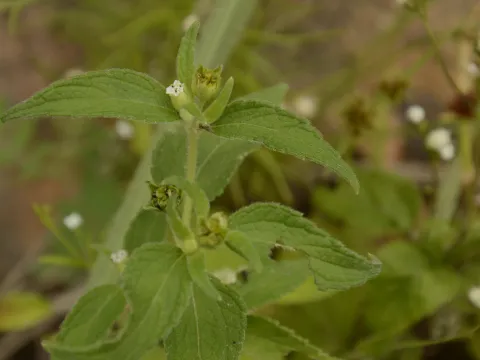
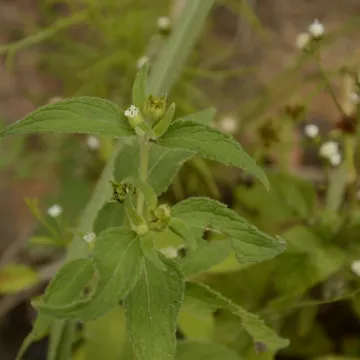
Botanically, Blainvillea acmella exhibits a branched stem covered with trichomes, reaching a height of up to 1 meter. The leaves are ovate with serrated margins, which is a classic characteristic of the family. The inflorescences are small, yellow capitula that develop throughout the flowering stage. The plant has a robust root system adapted to nutrient-rich soils.
Successful cultivation requires fertile, well-draining soil with a pH level between 6.0 and 7.0. The crop is highly sensitive to frost, necessitating a growing temperature above 20°C. Agricultural practices should focus on maintaining constant soil moisture and providing adequate nitrogen levels in the early vegetative phase to promote healthy foliage development.
- Production of antiseptic herbal extracts.
- Application in skincare formulations for anti-inflammatory effects.
- Use in traditional medicine for wound healing treatments.
- Research into phytochemical extraction and industrial processing.
Pests such as aphids and spider mites represent the primary challenge for growers, particularly in sheltered or greenhouse environments. Fungal pathogens, including root rot, occur if drainage is insufficient. Integrated pest management (IPM) involving biological controls and correct irrigation scheduling is the recommended approach for maintaining healthy crop stands.
Photo gallery