Christmas bells
Blandfordia punicea
Description
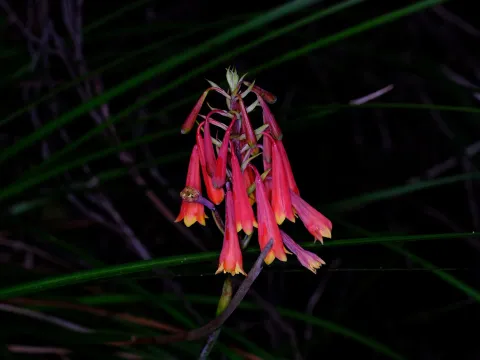
Christmas bells (Latin Blandfordia punicea) is a perennial herbaceous species belonging to the Blandfordiaceae family. This ornamental crop is highly regarded for its distinctive, bell-shaped flowers and is a signature element of the unique Tasmanian alpine and moorland flora.
The plant is endemic to Tasmania, where it primarily inhabits wet heaths, swamps, and mountain slopes. Its natural distribution is limited to areas with acidic, nutrient-poor, yet moisture-retentive soils, which dictates the specific requirements needed for its successful cultivation in agricultural and horticultural environments.
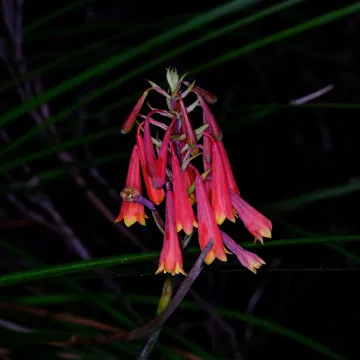
Botanically, the species is characterized by a basal rosette of tough, grass-like leaves and tall, sturdy flowering stems. Each stem carries a raceme of pendulous, bright red to orange-red flowers with distinctive yellow tips. The plant is a geophyte, possessing a specialized root system designed to store energy throughout the year.
Successful management requires strict adherence to specific agricultural practices to mirror its natural habitat:
- Utilization of well-drained, acidic soil mixtures containing organic peat.
- Maintenance of high ambient humidity and cool air temperatures.
- Consistent moisture levels without allowing waterlogging of the roots.
In terms of economic use, Blandfordia punicea is grown predominantly as a high-value ornamental crop for specialist nurseries and botanical collections. The most common phytosanitary risks involve root rot pathogens in poorly drained conditions and general pests such as aphids or slugs that can damage young succulent foliage during the early stages of growth.
Photo gallery