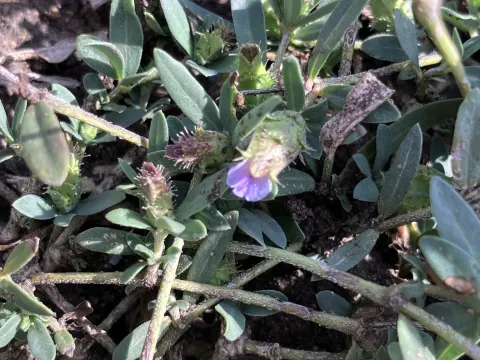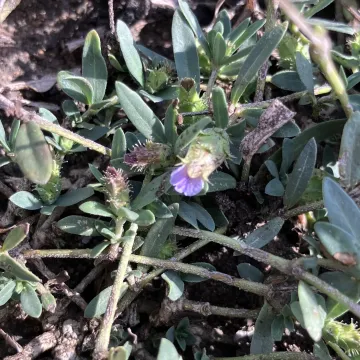
Blepharis molluginifolia
Blepharis molluginifolia
Description
Blepharis molluginifolia is a perennial herb belonging to the Acanthaceae family. In agricultural and botanical studies, this species is recognized for its creeping growth habit and its remarkable ability to thrive in harsh, arid, and semi-arid environments where traditional crops often fail.
The plant is native to the tropical and subtropical regions of South Asia, particularly India and Sri Lanka. It primarily inhabits sandy or rocky substrates and open grazing lands. Its distribution is closely linked to its adaptation to high-temperature regions with erratic rainfall patterns, making it a focus for studies on drought-resistant flora.
Botanically, it is characterized by its prostrate stems, small clustered leaves, and flowers protected by specialized prickly bracts. These features are evolutionary responses to intense solar radiation and moisture stress, allowing the plant to maintain physiological activity even during prolonged drought cycles.
Regarding agronomy, successful cultivation requires well-drained sandy or loamy soils. It does not demand high levels of fertilization and is generally resistant to nutrient-poor conditions. Farmers focusing on arid land reclamation utilize this plant because it stabilizes soil surfaces and protects against wind erosion while maintaining biomass production in extreme heat.
The economic utility of Blepharis molluginifolia is divided between its role as an emergency forage crop for livestock and its traditional medicinal applications. Local communities utilize its aerial parts for their reported antiseptic and healing properties. While it is generally hardy, potential threats include root rot diseases, which typically occur if the plant is subjected to waterlogged conditions or poor air circulation in the root zone.
Photo gallery