
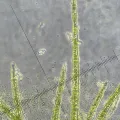
Blepharostoma trichophyllum
Blepharostoma trichophyllum
Description
Blepharostoma trichophyllum is a species of liverwort that belongs to the Pseudolepicoleaceae family. While it is not classified as a commercial agricultural crop, it occupies a significant niche in forest ecosystems. Understanding this plant is essential for ecologists and botanists studying forest biodiversity and microhabitat conservation.
The distribution of this species is circumpolar, found throughout the Northern Hemisphere. It thrives in temperate, boreal, and arctic regions, predominantly in moist, shaded environments. Common habitats include decaying logs, damp soil banks, and shaded rock surfaces where humidity remains consistently high, reflecting its preference for stable, undisturbed microclimates.
Botanically, this liverwort is distinguished by its delicate, thread-like leaf segments that resemble fine hairs. These structures allow the plant to maximize surface area for moisture absorption from the air. The growth form is typically a loose mat, ranging in color from pale green to yellowish-green, depending on its exposure to indirect sunlight and current moisture availability.
The environmental requirements for this plant are precise. It relies on high atmospheric humidity and cool, stable temperatures to maintain its metabolic functions. In terms of conservation and management, the preservation of the natural forest floor and canopy cover is vital to its survival. It does not require conventional fertilization or tillage, as it is perfectly adapted to natural soil successions.
There are no direct agricultural or industrial applications for Blepharostoma trichophyllum. However, it serves as an excellent bio-indicator for environmental health. The species is largely immune to traditional pests, yet it is highly sensitive to environmental degradation, such as deforestation and pollution. Maintaining habitat integrity is the only effective way to protect this unique biological resource.
Photo gallery