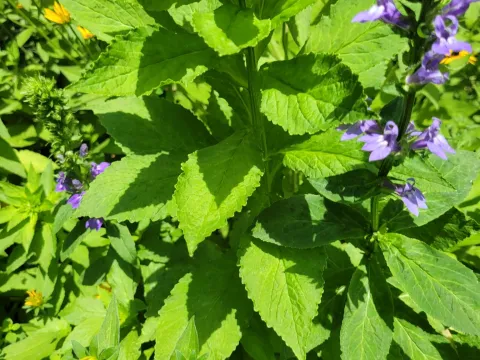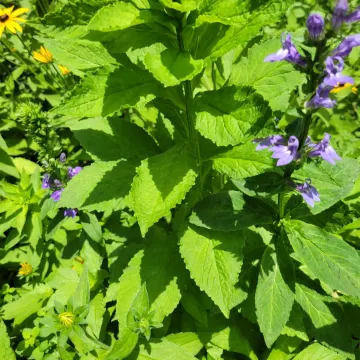

Great blue lobelia
Lobelia siphilitica L.
Description
Great blue lobelia (Lobelia siphilitica L.) is a perennial herbaceous plant belonging to the Campanulaceae family. Unlike many other lobelia species that are grown as annuals, this plant is a hardy perennial valued for its vigorous growth and striking blue flowers that add vertical interest to garden landscapes.
Native to North America, this species is naturally distributed in damp meadows, marshes, and woodland clearings. Its adaptation to moisture-rich environments defines its agricultural niche, making it an excellent candidate for rain gardens, wetland restoration projects, and decorative pond borders where other perennial species might struggle.
Botanically, the plant features erect, unbranched stems that can grow up to 1 meter in height. The foliage is alternate, lance-shaped, and slightly serrated. The most prominent feature is the terminal raceme of vibrant blue to violet bilaterally symmetrical flowers, which provide a long-lasting bloom display during the late summer season.
Agronomic requirements for successful cultivation include consistent soil moisture and fertile, organic-rich soil. While the plant can tolerate full sun, it performs exceptionally well in partial shade. Proper spacing is essential to ensure adequate air circulation, which prevents the development of fungal pathogens and promotes uniform growth of the perennial stands.
Key considerations for management and plant health include:
- Regular monitoring for aphid infestations and slugs.
- Mulching around the base to retain soil moisture during peak heat.
- Dividing mature clumps every few years to maintain vigor and prevent overcrowding.
Photo gallery