Bluebush
Maireana sedifolia (F. Muell.) Paul G. Wilson
Description
Bluebush (scientifically known as Maireana sedifolia) is a long-lived perennial shrub belonging to the Amaranthaceae family. It is a distinctive component of the Australian arid zone vegetation, highly valued for its resilience and ability to thrive in extremely harsh environmental conditions.
The plant originates from the interior regions of Australia. Its natural habitat includes vast rangelands where it persists in semi-arid climates characterized by irregular rainfall and high evapotranspiration rates, making it a critical species for arid land restoration and soil stability.
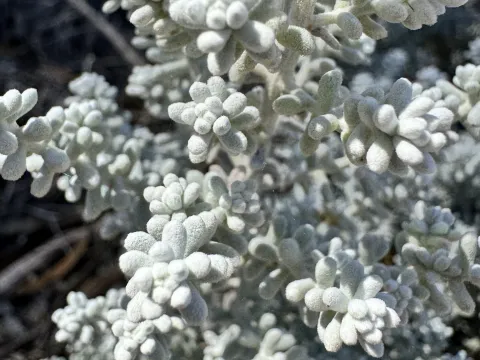
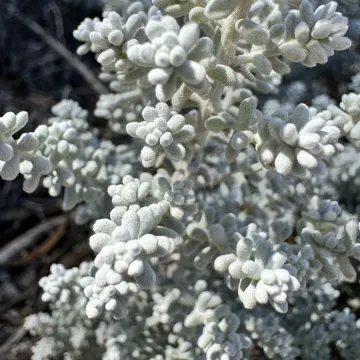
Botanically, Bluebush typically grows up to one meter in height with a dense, rounded habit. Its most striking feature is the foliage, which is covered in fine, hair-like structures that give it a silver-blue appearance. These leaves are succulent, allowing the plant to store moisture and withstand the intense heat and water scarcity of its environment.
Regarding cultivation requirements, the species is remarkably low-maintenance. It adapts well to various soil types, including those with high salinity or alkalinity, which are often unsuitable for conventional crops. Agronomic management involves controlling stocking rates on rangelands to ensure the regeneration of the shrub and prevent the degradation of the plant community.
The primary agricultural utility of Maireana sedifolia is as a valuable fodder resource, particularly for livestock such as sheep in arid landscapes. It provides essential nutrients when seasonal grasses are unavailable. While the plant is generally hardy, it is susceptible to overgrazing; however, it remains mostly free from major pest infestations or diseases in its natural range.
Photo gallery