Flat sedge
Blysmus compressus
Description
Flat sedge (Latin Blysmus compressus) is a perennial herbaceous plant belonging to the Cyperaceae family. In agricultural and botanical contexts, it is classified as a significant wetland plant that contributes to the composition of permanent pastures and natural forage lands.
The origin and range of this species span across temperate regions of Eurasia. It is naturally adapted to diverse habitats, including fens, stream banks, and damp meadows. It thrives particularly well in calcareous or slightly saline soils, where it forms dense, mat-like rhizomatous structures that stabilize the substrate.
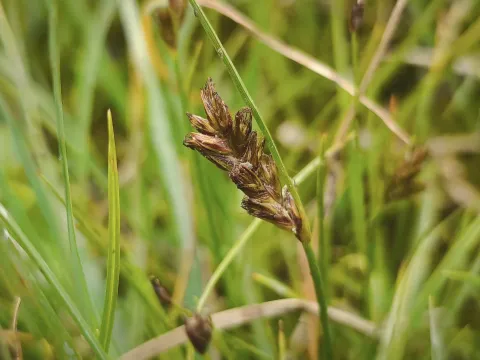
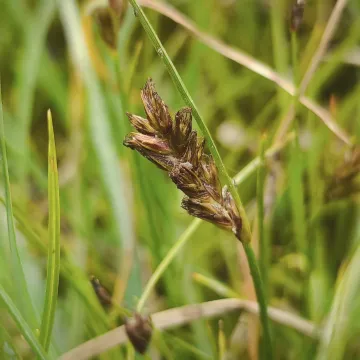
Botanically, the plant is identified by its creeping rhizomes and erect stems that reach up to 40 cm in height. The most distinguishing feature is its compressed, distichous spike-like inflorescence, which accounts for its specific epithet. The leaves are narrow, grassy, and typically basal, providing a high density of biomass at the ground level.
Flat sedge requires specific environmental conditions to reach its full development. It favors sites with a high water table and constant moisture. Agronomic management revolves primarily around hydrological maintenance; the plant is sensitive to significant drainage, which often leads to the encroachment of less moisture-tolerant species.
The agricultural utility of this species is largely found in its role as low-intensity grazing forage. While not a high-output commercial crop, it is valued for its resilience in harsh, wet conditions where other plants fail to survive. Major threats include:
- Fungal pathogens favored by stagnant water conditions.
- Herbivory by pests adapted to sedge-dominated meadows.
- Competitive exclusion by more vigorous invasive hydrophytes.
Photo gallery