Boscia senegalensis
Boscia senegalensis
Description
Boscia senegalensis, commonly known in its native range as "Aizen," is a perennial evergreen shrub or small tree belonging to the family Capparaceae. This species is highly valued for its ability to thrive in extremely arid environments where few other agricultural crops can survive.
Originating in the Sahel region of Africa, this plant is widespread across nations like Senegal, Mauritania, Mali, and Niger. It is deeply integrated into the traditional agricultural systems of the region, serving as a reliable source of nutrition and fodder during periods of severe drought.
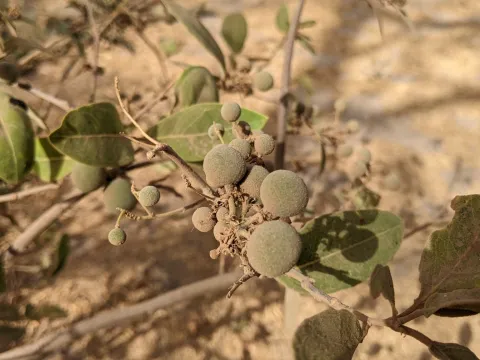
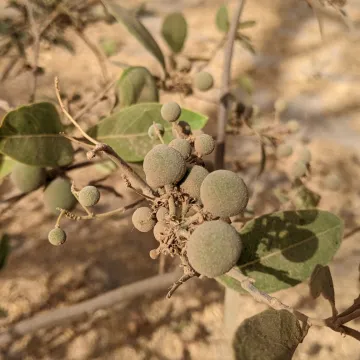
From a botanical perspective, the plant is characterized by its robust, leathery foliage and a deep root system that anchors the plant in sandy or rocky soils. It produces small, yellow-green flowers followed by spherical berries. These berries contain seeds that are chemically complex and require specific preparation techniques to remove natural bitterness.
The agronomic requirements of Boscia senegalensis are modest. It is well-adapted to nutrient-poor soils and high-temperature climates. Cultivation usually starts from seeds, though growth is slow, necessitating careful protection of seedlings from livestock foraging in the early stages of development.
The economic and social importance of the plant is significant:
- Seeds are processed into flour or boiled for human consumption during food shortages.
- Leaves serve as a vital fodder source for goats and camels in the dry season.
- The plant acts as a windbreak and helps in soil stabilization to combat desertification.
- Various extracts from the plant are studied for their potential pharmaceutical and antioxidant properties.
Photo gallery