Botryococcus braunii
Botryococcus braunii
Description
Botryococcus braunii is a green colonial microalga belonging to the class Trebouxiophyceae. It is widely recognized in the field of industrial biotechnology for its unique ability to produce and accumulate large quantities of hydrocarbons, which makes it a highly valuable candidate for the production of sustainable biofuels, particularly biodiesel and aviation kerosene.
The organism is globally distributed and can be found in a variety of freshwater and brackish environments. While it grows naturally in lakes and ponds, its cultivation as a crop is primarily conducted in controlled environments, such as photobioreactors and raceway ponds, to optimize the yield of its valuable oily metabolites.
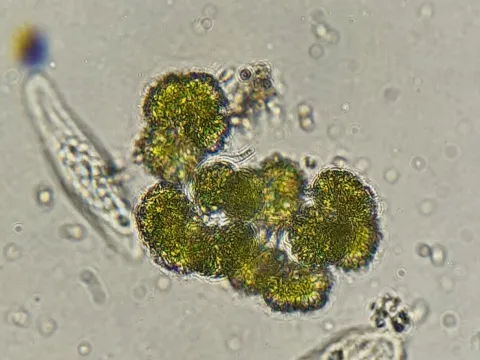
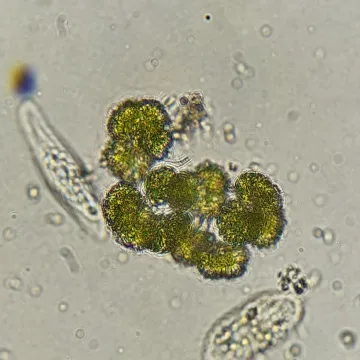
Botanically, the alga exists as colonies composed of individual cells embedded within a lipid-rich matrix. This distinctive feature allows the organism to maintain a high concentration of hydrocarbons relative to its biomass. The cell walls are composed of recalcitrant, resistant polymers, which require specific harvesting and extraction techniques to fully recover the internal lipids.
Cultivation requirements for this crop focus on maintaining optimal light intensity and temperatures between 20°C and 30°C. Furthermore, providing sufficient carbon dioxide and essential nutrients is critical for biomass development. Because the growth rate is relatively slow compared to other industrial algae species, managing competition from invasive species remains a primary challenge in outdoor production systems.
The main commercial application of Botryococcus braunii is the production of high-quality liquid fuel. Beyond energy, the biomass is explored for the extraction of fine chemicals, pigments, and antioxidants. Additionally, its ability to thrive in nutrient-rich waste streams makes it a candidate for environmental remediation projects and sustainable circular agriculture.
- Accumulation of hydrocarbons up to 75% of dry weight.
- High tolerance to varied aquatic conditions.
- Requires optimized bioreactor design for efficient growth.
- High potential for carbon sequestration during growth.
Photo gallery