Bottle brush grass
Anthephora pubescens Nees
Description
Bottle brush grass (botanical name Anthephora pubescens) is a perennial forage grass belonging to the Poaceae family. Known for its exceptional resilience, this species has become a staple for grazing systems in semi-arid and tropical regions where water availability is a major limiting factor for agriculture.
Originating from Southern Africa, this grass has been widely introduced to various dryland environments worldwide. Its ability to thrive in challenging landscapes where common forage grasses fail makes it a valuable asset for sustainable pasture management in arid climates.
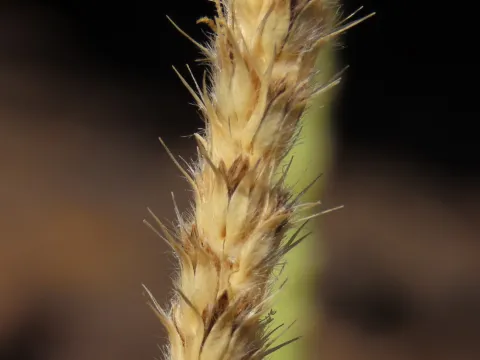
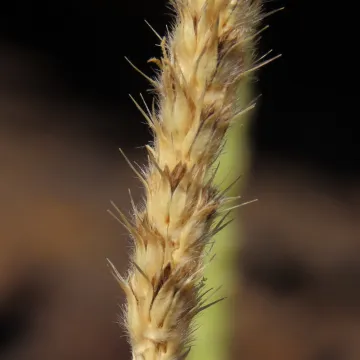
The morphology of the plant is defined by its deep root system and stiff, pubescent leaves which help in water retention. The inflorescence is a dense, spike-like raceme that resembles a bottle brush, a distinctive trait that gives the plant its common name. The plant grows in dense bunches, providing excellent ground cover.
Regarding cultivation requirements, Anthephora pubescens performs best on sandy and sandy-loam soils. It is notably drought-tolerant and can survive prolonged periods of high heat without significant loss of productivity. It requires minimal fertilizer inputs compared to more sensitive forage crops.
The agricultural usage of bottle brush grass focuses on grazing and hay production. While it is generally robust, growers must monitor for the following:
- Locust and grasshopper infestations.
- Fungal leaf pathogens during seasons with high humidity.
- Overgrazing, although the plant has a high recovery rate.
Photo gallery