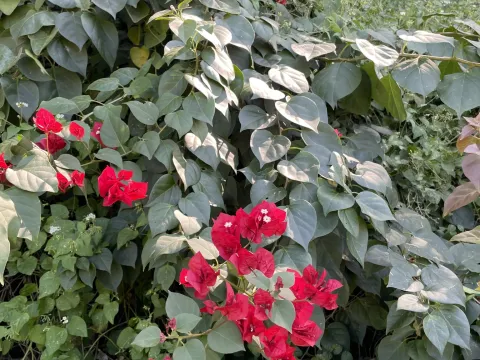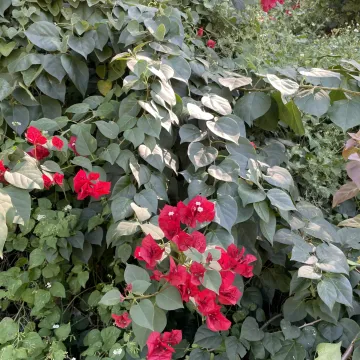
Bougainvillea buttiana
Bougainvillea buttiana
Description
Bougainvillea buttiana is a prominent hybrid ornamental plant belonging to the family Nyctaginaceae. It is a natural hybrid resulting from the cross between Bougainvillea peruviana and Bougainvillea glabra. This vine is highly prized in horticulture for its spectacular clusters of brightly colored bracts that provide a vibrant display during the flowering season.
Originating from the tropical regions of South America, the plant has a wide distribution in warm climates globally. In its native habitat and similar climatic zones, it is cultivated as an outdoor climbing plant for garden structures. In colder regions, it is popular as a container plant that is moved indoors during the winter months to protect it from frost.
Botanically, it is characterized by woody stems often armed with thorns. The leaves are ovate and evergreen in warm climates. The most significant feature is the colorful bracts, which are modified leaves, surrounding the tiny, tubular white or cream-colored true flowers. The range of bract colors includes magenta, red, orange, and purple shades.
Agrotechnical success depends on providing high levels of sunlight, as the plant requires full sun to bloom profusely. The soil should be slightly acidic to neutral, rich in organic matter, and, most importantly, possess excellent drainage. Excessive moisture in the root zone is the most common cause of failure in the cultivation of this species.
- Pruning is essential to maintain plant shape and encourage more dense blooming on new growth.
- Fertilization should prioritize phosphorus and potassium to support flower development.
- Winter maintenance requires keeping the plant in a cool, bright location with minimal watering.
- Versatile use in landscaping, including trellises, fences, wall covers, and as a centerpiece in large containers.
The plant is susceptible to common pests such as aphids, spider mites, and mealybugs, which are often encouraged by poor air circulation. Overwatering or poorly aerated substrates can lead to root rot and other fungal diseases, which are significantly detrimental to the health and aesthetics of the plant.
Photo gallery