Brazil nut
Bertholletia excelsa Bonpl.
Description
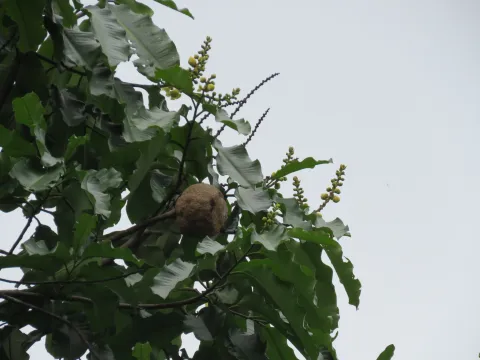
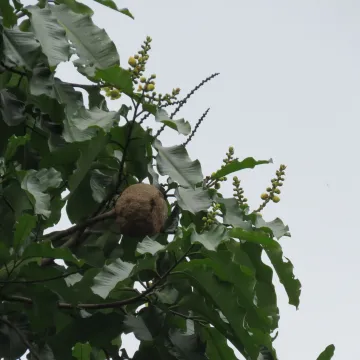
The Brazil nut tree, scientifically known as Bertholletia excelsa, is a majestic specimen of the Lecythidaceae family. It is recognized as one of the largest and longest-lived trees in the Amazon rainforest, often towering over the canopy. Its biological structure is adapted to the complex life cycles of tropical ecosystems, requiring decades to reach maturity and start producing seeds.
The native range of this tree spans across the Amazon basin in countries like Brazil, Peru, and Bolivia. It thrives in non-flooded, well-drained soils and requires a climate with consistent high humidity and temperature. Because of these specific requirements, attempts to establish monoculture plantations have often resulted in lower yields compared to wild-harvested trees, as the tree relies on diverse forest pollinators.
Botanically, the fruit of the Brazil nut is a large, woody capsule that resembles a coconut shell. Inside, the seeds are arranged like segments of an orange. A key botanical feature is the dependency on specific long-tongued bees for pollination. These bees require the nectar of specific orchid species found in the native forest to reproduce, creating a delicate ecological dependency that is difficult to replicate in controlled farming.
Agrotechnical management is limited because most Brazil nuts are harvested from the wild. When planted, young trees require careful maintenance, including protection from direct sunlight in the early stages and careful monitoring of soil moisture. Due to the slow growth rate, grafting techniques are increasingly used to produce trees that begin bearing fruit earlier than those grown from seeds, which can take up to twenty years.
Commercially, the Brazil nut is highly valued for its high selenium content and healthy fat profile. Aside from direct consumption, the oil is extracted for use in the cosmetic industry and for high-end culinary applications. Key pests and diseases include fungi like Fusarium, which can impact fruit development, and various beetles that bore into the hard capsules, potentially destroying the nuts before harvest.
Photo gallery