Breonadia salicina
Breonadia salicina
Description
Breonadia salicina is a perennial evergreen tree belonging to the Rubiaceae family. Known in the timber industry as the Matumi or Transvaal teak, it is a significant species in African ecology, valued for its impressive structural properties and longevity.
The native range of this tree spans across Tropical and Southern Africa, where it is predominantly found near riverbanks, wetlands, and riparian forests. It thrives in environments where soil moisture remains consistently high, allowing the tree to maintain its health even during dry spells.
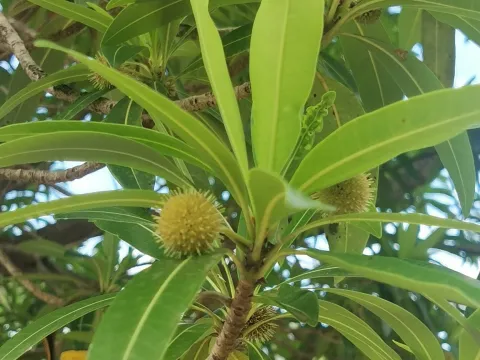
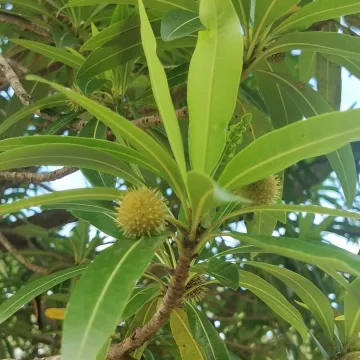
Botanically, the species is characterized by its long, lanceolate, leathery leaves that resemble those of a willow tree, and dense, spherical flower heads. The tree exhibits a sturdy growth habit, often developing a straight, tall trunk which is a highly desirable trait for forestry purposes.
Cultivation requires fertile, well-draining yet moisture-retentive soils. The species is highly photophilous and demands full sun exposure for optimal growth. Agricultural management involves careful monitoring of water tables and protection of young trees from invasive vegetation that could compete for essential soil nutrients.
The primary economic use is the extraction of Matumi timber, which is exceptionally dense, heavy, and resistant to termites and rot. This makes it a preferred material for high-end furniture, flooring, heavy-duty construction, and applications in marine environments where durability against moisture is essential.
Typical issues involve fungal infections in the root zone if drainage is inadequate, and susceptibility to certain wood-boring insects. To ensure successful cultivation, foresters focus on site selection that mimics the tree's natural riparian habitat and prevents waterlogging while ensuring deep soil moisture.
Photo gallery