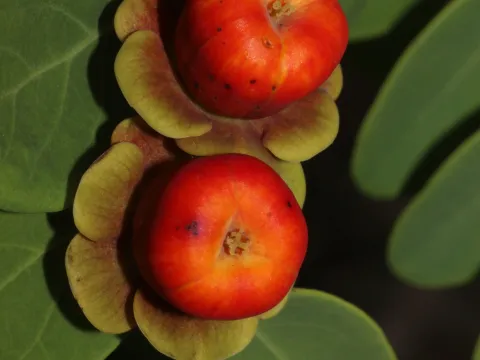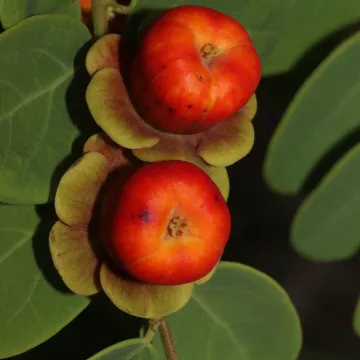
Breynia retusa
Breynia retusa
Description
Breynia retusa is an evergreen woody shrub belonging to the Phyllanthaceae family. Renowned for its resilient nature and dense, attractive foliage, this plant is widely utilized in both tropical landscaping and horticultural projects. Its ability to maintain a lush appearance throughout the year makes it a sought-after species for varied agro-ecological purposes.
Originating from the tropical regions of Asia, including India and the Malay Archipelago, Breynia retusa thrives in warm, humid environments. It naturally inhabits open forests and scrublands, having developed high adaptability to diverse light conditions, from full sun to dappled shade. This natural versatility facilitates its successful cultivation in various parts of the globe with similar climatic profiles.
Botanically, the species is identified by its slender, intricate branching habit and small, obovate-to-oblong leaves. The plant produces inconspicuous, monoecious flowers that often go unnoticed among the dense foliage. Its growth rate is moderate to fast under optimal conditions, allowing it to reach significant heights if not maintained by regular pruning practices.
Agricultural success depends on providing well-drained, fertile soil with consistent moisture levels. While the plant is drought-tolerant once established, supplemental irrigation during prolonged dry spells significantly enhances leaf density and overall health. Soil pH levels should ideally remain near neutral, with periodic application of nitrogen-rich fertilizers to support the production of new vegetative mass.
- Light requirements: Partial to full sunlight.
- Soil type: Loamy, well-draining substrate.
- Propagation: Stem cuttings are the most effective method.
- Common pests: Spider mites and scale insects in dry, low-airflow environments.
The economic and practical utility of Breynia retusa is diverse. Beyond its primary role as a decorative shrub for borders and hedges, the plant is historically significant in traditional medicine, where various extracts are utilized for their therapeutic properties, particularly in treating dermatological conditions. Ongoing research continues to assess its potential in sustainable agriculture and phytochemistry.
Photo gallery