Brighamia insignis
Brighamia insignis A. Gray
Description
Brighamia insignis, commonly known as the Hawaiian Palm or Vulcan Palm, is a distinctive succulent species belonging to the Campanulaceae family. Despite its common name, it is not a palm tree but rather a caudiciform plant that has evolved to store water within its thick, succulent stem to survive in its harsh, cliffside environment.
The plant is endemic to the Hawaiian Islands, specifically the islands of Kaua'i and Ni'ihau. In its native habitat, Brighamia insignis grows on precarious, steep rock faces. Because the population in the wild is critically endangered, the specimens found in commercial cultivation are propagated through specialized greenhouse programs, making it a highly sought-after plant for exotic plant collectors.
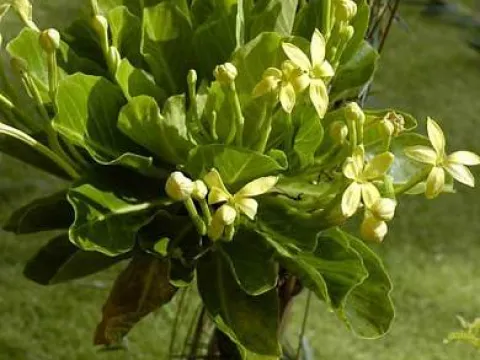
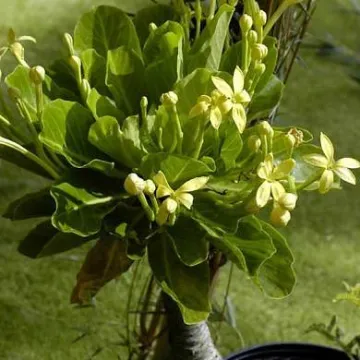
From a botanical standpoint, this species is noted for its rosette of broad, succulent leaves clustered at the top of a smooth, column-like trunk. The plant is known for its fragrant, trumpet-shaped flowers that bloom in the late autumn and winter. These flowers are traditionally pollinated by specific hawk moths in the wild, which are also increasingly rare, leading to hand-pollination requirements in controlled environments.
Agronomic requirements for successful cultivation include a very well-draining, airy substrate, similar to that used for other succulent species. Watering must be managed with extreme caution; the soil should be allowed to dry out significantly between waterings to prevent root rot. Brighamia prefers bright, indirect sunlight and consistent temperatures between 18°C and 25°C, as it is sensitive to cold drafts and rapid temperature fluctuations.
The primary use of Brighamia insignis is ornamental, prized for its unique architectural form in interior landscapes and conservatory displays. However, it is prone to pests such as spider mites and mealybugs, especially in indoor settings with low humidity. Growers should regularly inspect the leaf axils for these pests and maintain a clean environment to ensure the longevity of this rare succulent.
Photo gallery