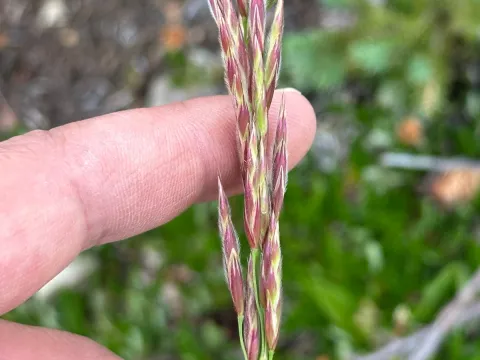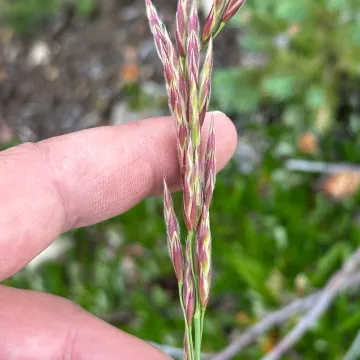
Pumpelly's brome
Bromopsis pumpelliana
Description
Pumpelly's brome (lat. Bromopsis pumpelliana) is a perennial grass species belonging to the Poaceae family. This species is highly regarded in agricultural circles for its exceptional durability and its ability to thrive in harsh, northern environments. As a hardy cool-season grass, it provides reliable forage when other crop species struggle to adapt to extreme temperature fluctuations and short growing seasons.
The native range of the species encompasses cold regions of Siberia, the Russian Far East, and North America. Due to its evolutionary history in these regions, the plant has developed a superior capacity for frost tolerance and winter hardiness. In modern agricultural practice, it is often utilized to establish long-term pastures, remaining productive for over a decade with minimal maintenance.
Botanically, Pumpelly's brome is a rhizomatous grass that forms thick, leafy bunches. Its stems grow to a height of 100 to 120 cm, providing significant biomass for harvest. The deep and extensive root system is a signature feature, allowing the plant to access subsoil moisture, which renders it highly drought-tolerant compared to other brome varieties used in agriculture.
Agricultural success depends on proper site selection and soil preparation. The grass performs best in well-drained loam soils but is known to adapt to a variety of textures, including sandy soils. Sowing should be executed with high-quality seeds at an optimal depth. Nitrogen fertilization in early spring is critical for maximizing biomass, while proper grazing management ensures the longevity of the stand.
- Excellent nutritional value for livestock.
- Strong tolerance to extremely cold climates.
- Deep root system for soil erosion control.
- High regeneration capacity after grazing.
Economically, Pumpelly's brome is valued for both grazing and hay production. Livestock, particularly cattle and sheep, find it palatable throughout the growing season. The high energy density of the forage makes it an ideal feed choice for wintering livestock. Furthermore, its ability to hold soil in place makes it a preferred choice for reclaiming land in areas prone to wind or water erosion.
Like most forage grasses, this species is susceptible to certain rusts and smuts, especially when growing in dense or poorly ventilated stands. Pests such as aphids and various grass-feeding larvae can cause localized damage. Integrated pest management, including periodic mowing and maintaining appropriate plant density, is essential to minimize the impact of these issues on yield quality and quantity.
Photo gallery