Rattlesnake brome
Bromus briziformis
Description
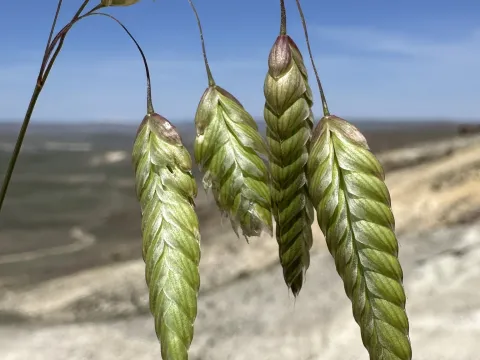
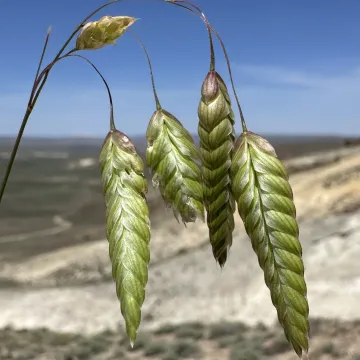
Rattlesnake brome (Bromus briziformis) is an annual grass species belonging to the Poaceae family. The plant is widely recognized for its attractive, drooping, and flattened spikelets that closely resemble the rattles of a snake or the seed heads of quaking grass, which is the origin of its common name.
Native to Europe and parts of Asia, this plant has adapted to survive in various dry and rocky environments. It is often found in open grasslands, sandy soils, and disturbed areas where competition from other vegetation is minimal. Its distribution is closely linked to temperate climate zones with distinct dry seasons.
The botanical structure consists of slender stems, usually reaching heights of 30 to 60 cm. The leaves are narrow and often sparsely hairy. The defining feature is the inflorescence, a drooping panicle with large, ovate spikelets that turn a light straw color upon maturity, making the plant visually striking in its natural habitat.
Cultivation requirements are relatively low, as Bromus briziformis prefers full sun and well-drained, slightly infertile soils. It is highly resistant to drought, making it an excellent candidate for low-maintenance landscaping. Agronomic practices typically involve early spring sowing and protection against aggressive weeds during the germination phase.
The economic utility of rattlesnake brome is primarily found in its aesthetic value. It is a prized element in wildflower meadows and dried flower arrangements due to its unique structure. In agriculture, it serves as a forage supplement in semi-arid regions where its resilience allows it to maintain biomass when standard pasture grasses fail.
- Drought tolerance
- Ornamental and floral value
- Low soil fertility requirements
- Excellent resistance to standard grass diseases
Photo gallery