Hungarian brome
Bromus pannonicus
Description
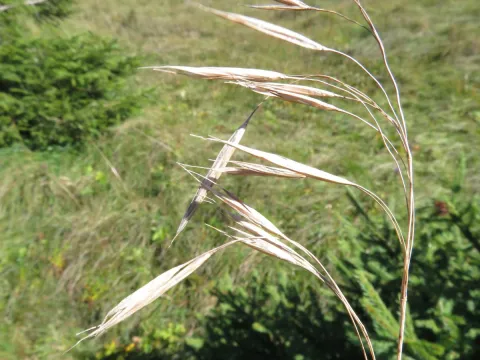
Hungarian brome (lat. Bromus pannonicus) is a perennial grass species belonging to the Poaceae family. As an agricultural crop, it is valued for its resilience and ability to thrive in diverse environmental conditions, making it a reliable choice for permanent pastures and hay meadows in temperate climate zones.
Originating from the steppe and forest-steppe regions of Central and Eastern Europe, this species has evolved to tolerate temperature fluctuations and seasonal drought. Its natural adaptability allows it to establish well in various terrains, provided the soil drainage is adequate. It is recognized for its longevity, remaining productive for several years after initial seeding.
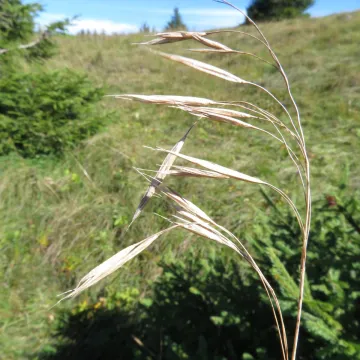
Botanically, the plant features a robust root system capable of penetrating deep into the soil to access moisture. The stems are sturdy and erect, producing narrow leaves that remain nutritious throughout the early growing stages. The inflorescence is a typical panicle, which produces high-quality seeds, facilitating easier agricultural management and field propagation for farmers.
Agronomic requirements involve well-drained fertile soils, although the species shows impressive tolerance to marginal land conditions. Optimal cultivation techniques emphasize proper soil preparation and seedbed consolidation to ensure uniform germination. Nitrogen fertilization is recommended during early spring growth to maximize biomass production, particularly when the crop is intended for hay production.
- Excellent forage quality for ruminant livestock.
- Strong drought resistance compared to conventional ryegrasses.
- High biomass yield suitable for hay and silage.
- Effective soil stabilization properties on sloped agricultural land.
The primary use of this crop is livestock feed, where it serves as both a grazing resource and a source of stored winter fodder. Like most grass species, it can be susceptible to common pathogens such as rusts and smuts under high humidity conditions. Implementing crop rotation and balanced nutrient management is essential for minimizing disease incidence and ensuring the long-term health of the stand.
Photo gallery