Broom brome
Bromus scoparius
Description
Broom brome (Latin: Bromus scoparius) is an annual grass species belonging to the Poaceae family. In agricultural settings, it is recognized as a hardy plant capable of surviving in arid environments where other species might fail to thrive, making it a subject of interest for extensive grassland management.
The native range of this species extends across the Mediterranean basin, Central Asia, and parts of Europe. It thrives in open, sunny habitats, including dry rocky slopes, neglected fields, and pastures. Its ability to colonize marginal lands makes it a common feature in Mediterranean-type ecosystems characterized by hot, dry summers.
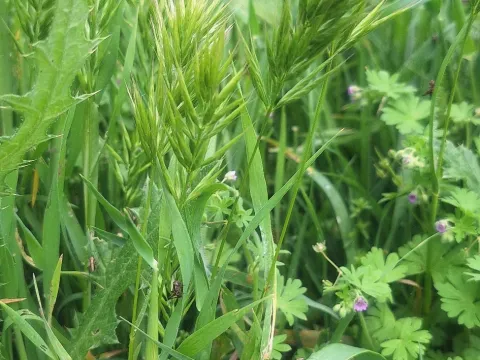
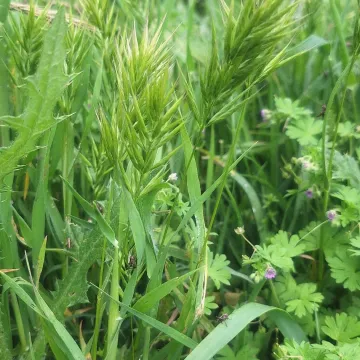
Botanically, Bromus scoparius is defined by its erect stems reaching heights between 10 and 40 cm. The leaves are typically narrow and may feature fine pubescence. The inflorescence is a dense, contracted panicle, which gives the grass a distinct appearance resembling a small broom, which explains its common name.
Cultivation requirements for this grass focus on soil aeration and drainage. It does not demand high nutrient levels, often thriving on sandy or gravelly soils where competition is low. Agronomic practice involves managing grazing pressure during the early spring growth phase to ensure that the plants reach their full nutritional potential before the heat of the season.
In terms of agricultural utility, it serves as a source of early-season forage, particularly suitable for sheep and goats in grazing systems. While it is generally resilient, it can be susceptible to common grass diseases like rusts under humid conditions and may be impacted by stem-boring insects during its peak growing cycle.
Photo gallery