Angel's Trumpet
Brugmansia arborea (L.) Lagerh.
Description
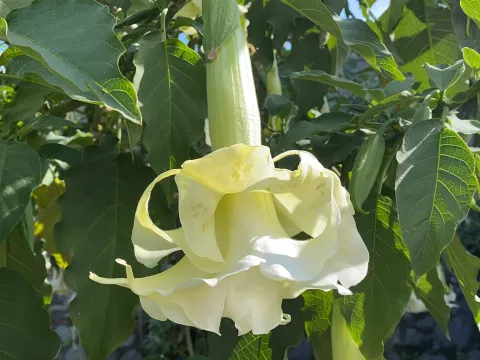
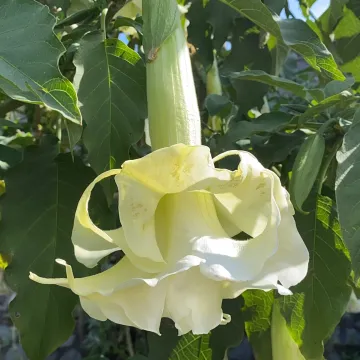
Brugmansia arborea, commonly known as Angel's Trumpet, is a perennial woody plant belonging to the Solanaceae family. In its natural form, it grows as a large shrub or a small tree characterized by magnificent trumpet-shaped flowers. These blossoms are renowned for their powerful fragrance, which becomes particularly intense during the evening hours.
The native range of this species is located in the high-altitude regions of the Andes in South America, including countries like Ecuador and Colombia. Due to its exotic appearance, it has become a popular ornamental plant globally. However, because of its limited cold hardiness, it is mostly cultivated as a container plant in temperate climates, requiring indoor protection during winter.
Botanically, the plant features large, elongated leaves and a robust root system. Its flowers are typically white or cream-colored, reaching significant sizes. It is crucial to note that all parts of the plant are poisonous, containing alkaloids like scopolamine and atropine. Therefore, growers must exercise caution when handling the plant to avoid skin irritation or accidental ingestion.
The successful cultivation of Brugmansia requires nutrient-rich, well-draining soil with a slightly acidic to neutral pH. It is a highly thirsty plant that demands consistent and heavy watering throughout its active growing phase. To achieve prolific flowering, it needs plenty of direct sunlight and a steady supply of potassium-rich fertilizers applied during the growing season.
In landscaping, it is used as a focal point or a feature plant in patios and conservatories. Common pests include spider mites, whiteflies, and aphids, which can quickly colonize the plant if the air is too dry. Maintaining good air circulation and monitoring the soil moisture are essential practices for preventing fungal diseases and maintaining the health of the shrub.
- Light requirement: Full sun to partial shade
- Feeding: Regular fertilization every 7–10 days
- Winter maintenance: Protect from frost; store in a cool, bright place
- Propagation: Primarily via stem cuttings
Photo gallery