Japanese bryony
Bryonia japonica
Description
Japanese bryony (Bryonia japonica) is a perennial climbing plant belonging to the Cucurbitaceae family. It is a distinct botanical species characterized by its vigorous growth habit and specific adaptation to the ecosystems of East Asia, where it plays an important role in forest biodiversity.
The native distribution area of this species includes Japan, the Korean Peninsula, and parts of China. It typically thrives in regions with moderate temperatures and sufficient humidity, often colonizing shrubby areas and woodland borders where it can utilize other vegetation as a natural trellis to reach sunlight.
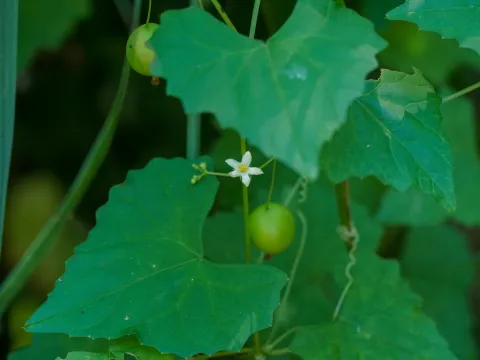
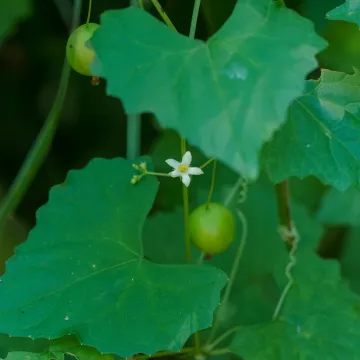
Morphologically, the plant features palmate, lobed leaves and long, flexible stems armed with tendrils. Its root system is notably fleshy and tuberous, acting as a reservoir for nutrients. The flowers are small and inconspicuous, often yellow-green, while the fruit develops into small, succulent berries that are characteristic of the genus.
Cultivation requirements involve providing well-drained, nutrient-rich soil and a structural support system. Bryonia japonica is highly sensitive to soil compaction and waterlogging, which can lead to rapid root decay. In a garden or agricultural setting, consistent spacing is required to ensure adequate airflow, which helps mitigate the risk of fungal infections.
The agricultural and economic utility of this plant is largely centered on its traditional use in phytotherapy and herbal research. While not a conventional crop, it is cultivated for specific medicinal extractions. Growers must remain vigilant against common pests such as aphids and spider mites, as well as soil-borne pathogens during periods of high humidity.
Photo gallery