Buchnera urticifolia
Buchnera urticifolia
Description
Buchnera urticifolia is a plant species belonging to the Orobanchaceae family. It is a hemiparasitic herbaceous plant that relies on its photosynthetic capabilities while simultaneously extracting water and minerals from the roots of host plants through specialized connections.
The species is native to tropical regions, with a primary distribution across the African continent. It is commonly found in open habitats, such as grasslands, savannas, and damp open woodlands, where it interacts with various native plant species to sustain its physiological requirements.
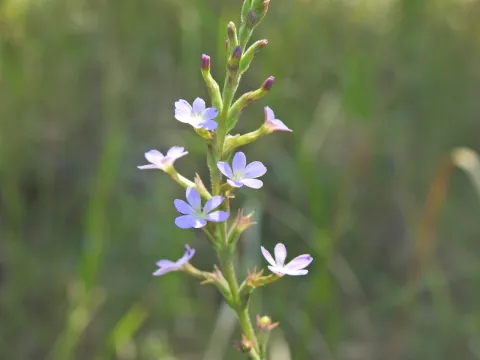
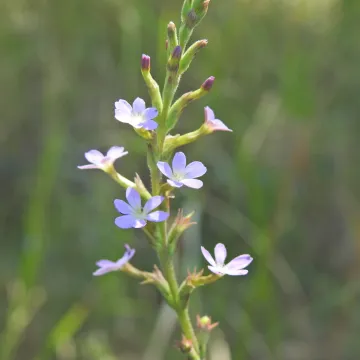
Botanically, Buchnera urticifolia is distinguished by its erect stems and opposite leaves with serrated margins, which bear a resemblance to the leaves of common nettle. The plant produces tubular flowers arranged in spike-like racemes, which are highly attractive to specific pollinators within their native ecosystem.
- Root system: Forms haustoria to attach to hosts.
- Flowering period: Typically seasonal, based on rainfall patterns.
- Propagation: Primarily by seeds, which can remain dormant in the soil.
From an ecological and agricultural perspective, this plant is categorized as a root hemiparasite. While it is not a major cultivated crop, its presence in agricultural fields can be problematic if it targets staple crops, as it may compete for water and nutrients, potentially reducing yields of the host plants.
Management of this species in areas where it interferes with agricultural activity involves standard weed control practices, such as deep tillage to disrupt root connections, crop rotation, and the implementation of fallow periods to reduce the seed bank in the soil.
Photo gallery