Madagascar butterfly bush
Buddleja madagascariensis
Description
Buddleja madagascariensis, commonly known as the Madagascar butterfly bush, is a robust evergreen shrub belonging to the Scrophulariaceae family. It is recognized for its rapid growth rate and vigorous climbing habit, making it an excellent candidate for covering trellises, fences, and walls in frost-free environments.
As its name suggests, this species is native to Madagascar. It has been introduced to various tropical and subtropical regions worldwide, where it thrives in warm climates. Its ability to adapt to diverse ecological niches has allowed it to become a staple in many botanical gardens and residential landscapes within its hardiness zone.
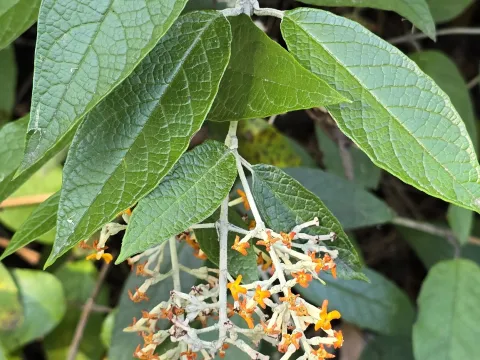
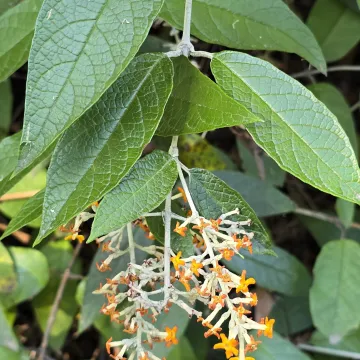
The botanical profile of this plant features long, arching stems covered with foliage that is dark green on the upper surface and distinctly felted, greyish-white on the underside. The plant produces large, terminal panicles of tubular, bright orange-yellow flowers, which are highly fragrant and typically bloom during the cooler months of the year.
To ensure healthy growth and vigorous flowering, several agronomic conditions must be met:
- Sun exposure: Full sun is essential to promote intense flowering and prevent leggy growth.
- Soil type: It prefers fertile, well-drained loamy soils but is relatively tolerant of various soil types if drainage is adequate.
- Water management: Regular irrigation is beneficial, though the plant shows moderate drought tolerance once established.
- Climate: It is frost-sensitive and should be planted in areas where temperatures rarely dip below freezing.
In terms of management, annual pruning is highly recommended to control the plant's aggressive growth and to stimulate new blooming wood. While relatively hardy, it can be susceptible to common pests like spider mites and aphids, especially in greenhouse conditions. Proper soil aeration and spacing are vital to prevent fungal issues related to humidity and poor air circulation.
Photo gallery