Bulbostylis barbata
Bulbostylis barbata (Rottb.) C. B. Clarke
Description
Bulbostylis barbata is an annual herbaceous plant belonging to the Cyperaceae family. Within agricultural sciences, it is recognized as a resilient species that thrives in arid and semi-arid environments, contributing significantly to the biomass of native pastures in its native range.
The plant is widely distributed across tropical and subtropical regions of Africa, Asia, and Australia. It is highly valued for its ability to colonize degraded lands and sandy areas where more sensitive forage crops struggle to establish and maintain a population during the dry season.
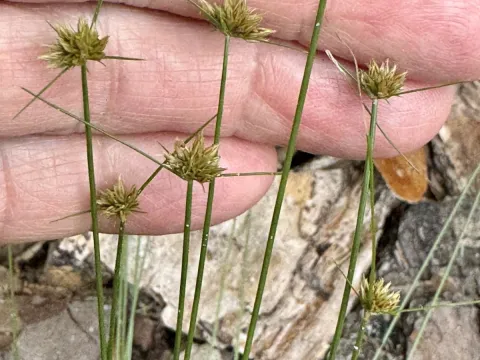
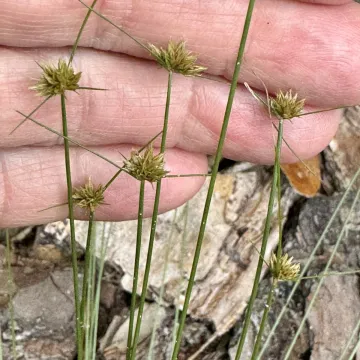
Botanically, it features slender, grass-like leaves and distinctively bearded spikelets, which provide its common name. Its root system is relatively shallow but highly efficient at moisture absorption, allowing the plant to reach maturity within a short window of optimal weather conditions.
The cultivation requirements are minimal, as the species prefers sandy, well-drained soils and high sunlight exposure. It does not demand heavy irrigation or fertilization. Agronomists often focus on grazing management to ensure that the plant completes its life cycle and produces sufficient seeds for natural regeneration.
The primary agricultural utility of this plant is as a source of livestock feed in marginal lands. Additionally, it serves as an effective soil stabilizer in regions prone to wind erosion. While it remains largely free from major agricultural pests, field observations suggest that excessive moisture can occasionally lead to root rot or fungal infections.
Photo gallery