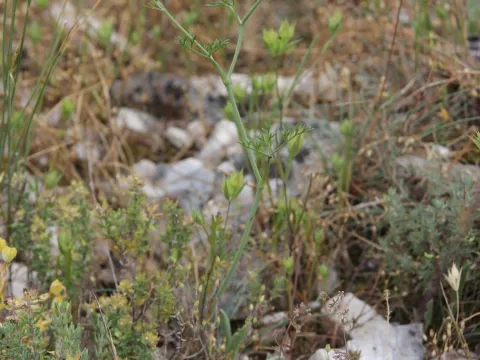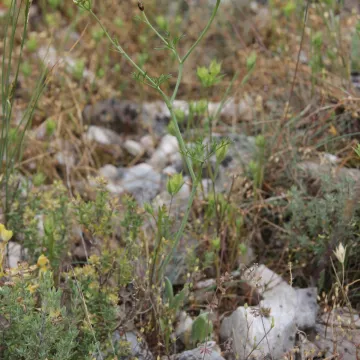
Great Pignut
Bunium bulbocastanum
Description
Great Pignut (Latin: Bunium bulbocastanum) is a herbaceous perennial plant belonging to the Apiaceae family. It is primarily cultivated for its edible tuberous roots, which have a characteristic chestnut-like flavor, and its seeds, which serve as a high-quality spice in various cuisines.
The plant originates from Southern and Central Europe and parts of Western Asia. It typically grows in meadows and open, sunny slopes. In agricultural practice, it requires regions with mild climates and a sufficient growing season to allow the tubers to mature properly before the winter dormancy.
Botanically, the plant features finely divided leaves and produces small, white umbrella-like inflorescences. The most significant part is the underground tuber, which develops as a storage organ. The plant's architecture is typical for the family, with a slender stem and strong aromatic properties derived from essential oils.
Agronomic requirements center on well-drained, sandy-loam soils with a neutral or slightly alkaline pH. Water management is critical; while the crop needs moisture during the active growth phase, stagnant water is detrimental to tuber development. Regular weeding is necessary because the plant is a poor competitor against aggressive weeds.
The main agricultural use is for both the culinary market, where tubers are used as a vegetable substitute, and the spice trade, where the seeds are prized. Common health issues for the crop include fungal root rot triggered by excessive irrigation and standard pests that affect the Apiaceae family, such as root flies and aphids.
- Family: Apiaceae
- Main Product: Edible tubers and seeds
- Soil Preference: Light, well-drained soil
- Planting Style: Open field cultivation
Photo gallery