Long-leaf hare's ear
Bupleurum longifolium
Description
Long-leaf hare's ear (Latin: Bupleurum longifolium) is a perennial herbaceous plant belonging to the Apiaceae family. This species is highly valued both for its chemical profile, which is useful in medicine, and for its aesthetic value in landscape design, serving as an interesting specimen in perennial gardens.
The plant originates from the mountainous regions and forests of Eurasia. It is well-adapted to cooler climates and can tolerate diverse environmental conditions. Due to its natural habitat, it shows excellent cold hardiness, making it a reliable perennial for agriculture in temperate zones.
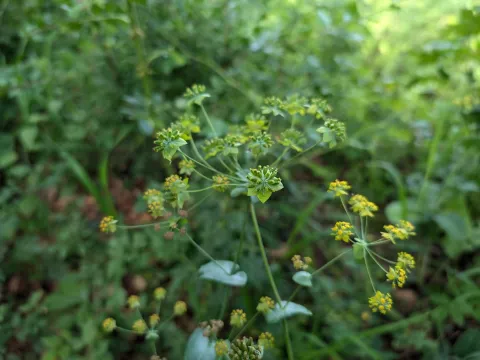
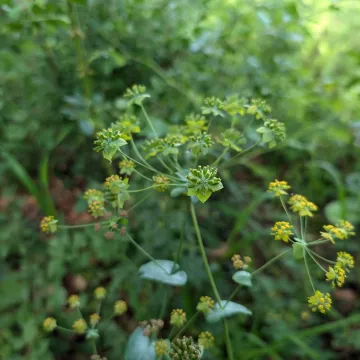
Botanically, it is characterized by a sturdy stem and distinctive, long, lanceolate leaves that wrap around the stalk. The flowers are arranged in compound umbels, which are typical of the Apiaceae family. Its root system is deep and well-developed, allowing the plant to sustain itself during periods of moderate dryness.
When cultivating this crop, one must ensure a site with well-drained, fertile soil, ideally with a neutral pH. While it is relatively low-maintenance, adequate sunlight is crucial for proper development and blooming. Regular weeding and preventing waterlogging are the most important aspects of its day-to-day agricultural management.
The primary use of the crop is as a source of bioactive compounds used in traditional and modern herbal practice. Regarding plant health, the species is occasionally susceptible to fungal diseases such as powdery mildew in poorly ventilated or excessively humid conditions, as well as common pests like aphids which can be managed with standard pest control practices.
Photo gallery