Butea monosperma
Butea monosperma
Description
Butea monosperma, commonly known as the Flame of the Forest, is a deciduous tree belonging to the Fabaceae (legume) family. This species is recognized for its striking appearance and its significant role in agroforestry systems across tropical and subtropical regions.
The tree is native to the tropical parts of the Indian subcontinent and Southeast Asia. It is highly valued for its ability to thrive in regions with distinct seasonal changes, particularly where long dry spells occur, demonstrating excellent survival strategies in challenging environmental conditions.
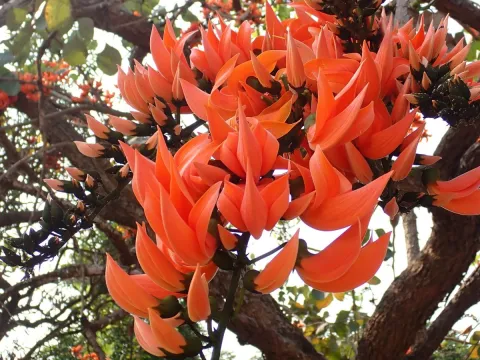
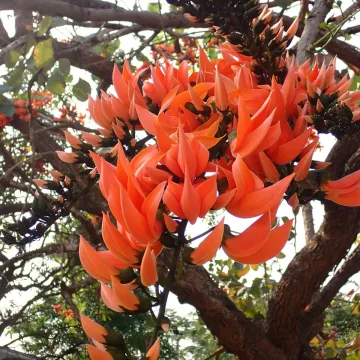
Botanically, Butea monosperma is characterized by its trifoliate leaves and spectacular racemes of bright orange-red flowers that appear before the new foliage. The tree generally grows to heights of 10 to 15 meters, with a crooked trunk and an irregular, wide-spreading canopy that provides ample shade in hot climates.
Regarding cultivation requirements, the species is remarkably hardy. It performs well in various soil types, ranging from sandy soils to heavy clays, and can even withstand waterlogged conditions or moderate salinity. In terms of silvicultural practice, establishing the crop from seeds is common, and young saplings require protection from livestock browsing during their initial developmental phase.
The primary economic use of this tree is the production of lac, a resinous substance secreted by the lac insect (Laccifer lacca) which resides on the twigs. Furthermore, the tree provides valuable materials such as dyes, tannins, and fibers, and is widely respected in traditional medicinal practices for its healing properties.
- Commercial production of shellac
- Source of natural plant dyes
- Soil enrichment and nitrogen fixation
- Traditional herbal medicine
The tree is susceptible to specific pests, such as leaf-eating caterpillars and stem borers, which can affect its vitality. To minimize these risks, plantation managers often employ integrated pest management strategies, focusing on maintaining biodiversity around the trees and ensuring proper nutrient balance in the soil to support natural resistance.
Photo gallery