Green shield-moss
Buxbaumia viridis
Description
Green shield-moss (Buxbaumia viridis) is a rare and highly specialized species belonging to the family Buxbaumiaceae. While it does not serve as an agricultural crop, it acts as a significant bioindicator for the ecological health of forest areas adjacent to agricultural lands, signaling the presence of stable, undisturbed microhabitats.
The origin of this species is tied to temperate regions of the Northern Hemisphere, where it occupies specific niches within forest ecosystems. It is not cultivated for agricultural purposes; instead, it relies entirely on natural forest succession processes, particularly the availability of decaying wood logs which are essential for its life cycle.
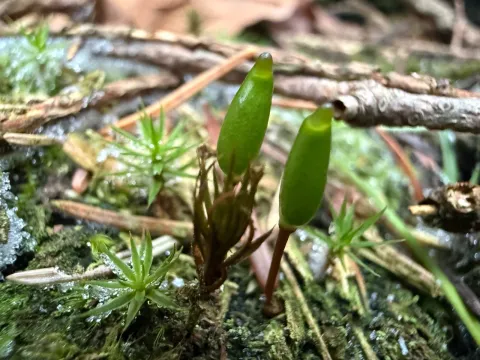
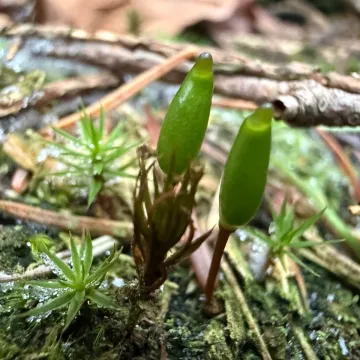
From a botanical perspective, the green shield-moss is remarkable for its morphology. The gametophyte is largely reduced to a protonema, while the visible part of the plant is the capsule of the sporophyte, which is asymmetrical and greenish, designed to optimize spore dispersal in the humid forest understory.
The environmental requirements are strict: the species demands high and consistent humidity and the presence of decomposing wood with specific decay stages. Unlike standard crops, it does not respond to fertilizers or irrigation; rather, it requires the preservation of natural forest conditions, making it an indicator of ecological stability.
There is no economic or agricultural use for this plant. As a protected species under various international regulations, its management focus is strictly on conservation. Common threats include deforestation, the removal of coarse woody debris from forests, and atmospheric pollution, which affects the delicate reproductive structures of the moss.
- Family: Buxbaumiaceae
- Habitat type: Decaying logs
- Ecological status: Vulnerable/Protected
- Preferred light: Low light (shade)
Photo gallery