Yucatan caesalpinia
Caesalpinia yucatanensis
Description
Yucatan caesalpinia (Caesalpinia yucatanensis) is a distinctive woody shrub belonging to the Fabaceae family. While not a conventional commercial crop, this plant is recognized for its robustness in tropical climates and its significant potential in restorative landscaping and dry-land farming projects.
The species is native to the Yucatan Peninsula in Mexico, primarily thriving in dry tropical forests and limestone rocky habitats. Its geographical range is highly specialized, reflecting an evolutionary history of adaptation to nutrient-poor soils and sporadic rainfall patterns characteristic of Central American arid zones.
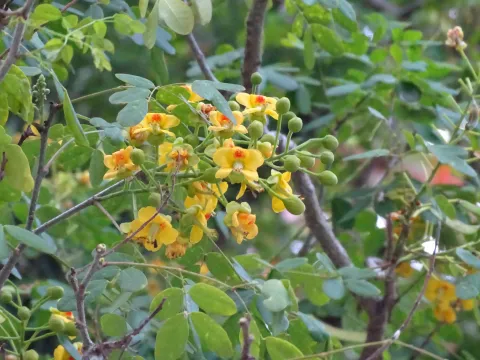
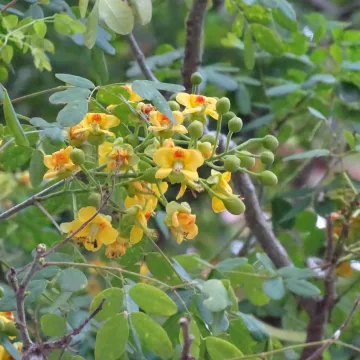
Botanically, Caesalpinia yucatanensis is characterized by its feathery, compound leaves and typical legume-family floral structures. It has a high drought-tolerance threshold, facilitated by a deep, expansive root system. This plant can exist as a multi-stemmed shrub or a small tree depending on the pruning techniques and environmental pressures applied during its development.
Cultivation requirements demand full sun exposure and excellent soil drainage. Heavy clay soils that retain moisture are generally unsuitable, as they can cause root rot. In arid regions, supplemental irrigation is only necessary during the establishment phase, after which the plant is highly autonomous and requires minimal maintenance to thrive in its typical climate.
The main agricultural and horticultural utility involves the use of the plant for windbreaks, erosion control, and ornamental gardening in arid regions. As an nitrogen-fixing species, it has the potential to improve soil health in its immediate vicinity, making it a valuable candidate for permaculture systems and soil restoration in subtropical climates.
- Full sun exposure is critical.
- Requires well-drained, sandy or rocky soil.
- High tolerance for extreme heat.
- Low water requirements after establishment.
Photo gallery