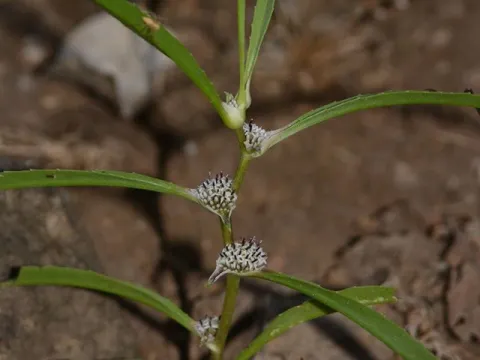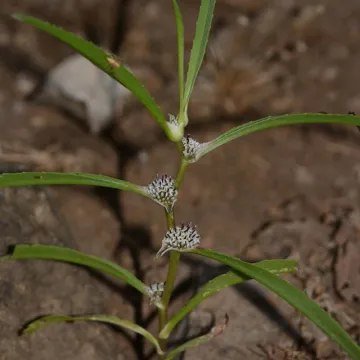
Caesulia axillaris
Caesulia axillaris
Description
Caesulia axillaris is a herbaceous annual plant belonging to the Asteraceae family. While often categorized as a weed in agricultural landscapes, it is a significant biological subject due to its unique adaptation to aquatic and semi-aquatic habitats, particularly in rice-producing regions.
Originating in tropical Asia, particularly in India, the plant has established a broad range across tropical and subtropical zones. Its cultivation or presence is strictly tied to high-moisture environments, where it thrives in hydromorphic soils that are typically unsuitable for many conventional crops.
Botanically, Caesulia axillaris is characterized by its alternate, lanceolate leaves and distinct axillary flower heads. The plant possesses a robust stem structure that allows it to flourish in waterlogged conditions. Its root system is highly adapted to nutrient uptake in environments with limited oxygen availability in the soil.
Climate and soil requirements for this species are demanding. It requires consistent tropical temperatures, high humidity, and sufficient sunlight to complete its life cycle. Agrotechnically, managing this plant involves monitoring water levels and maintaining proper field sanitation, as its rapid growth can lead to intense competition with adjacent cash crops.
The plant has several хозяйственное uses and ecological roles.
- It is utilized in traditional medicine systems in Asia for its antiseptic properties.
- It acts as an indicator species for soil moisture levels.
- Research into its phytoremediation potential is currently being explored.
Photo gallery