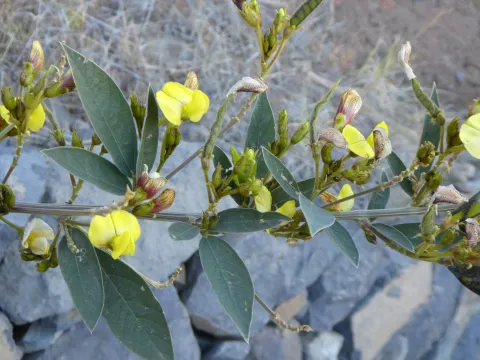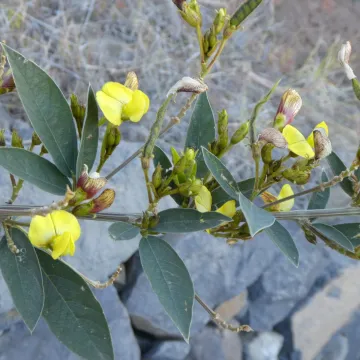
Pigeon pea
Cajanus cajan (L.) Millsp.
Description
Pigeon pea (Cajanus cajan) is a perennial legume from the Fabaceae family. Recognized globally for its exceptional drought tolerance and nutritional value, it stands as a cornerstone crop in semi-arid and tropical agriculture, supporting both human nutrition and soil health.
Originating from India, pigeon pea has become a vital crop across Africa, Latin America, and Southeast Asia. Its ability to thrive in diverse environments and provide multiple agricultural benefits has led to its extensive cultivation in areas with limited water availability.
The plant exhibits a shrub-like growth habit, typically growing between 1 and 4 meters in height. It features a deep taproot system, which is instrumental for surviving long dry spells, and trifoliate leaves with yellow or bicolored flowers that develop into pods containing multiple seeds.
Cultivation requirements favor warm temperatures, ideally between 20°C and 30°C, and well-drained, fertile or even marginal soils. It is particularly sensitive to waterlogging, which often leads to severe yield loss, and therefore requires fields with excellent drainage characteristics.
Pigeon pea serves various economic and ecological purposes:
- human consumption as a primary source of vegetable protein;
- soil enrichment through biological nitrogen fixation;
- livestock feed derived from processed leaves and pods;
- utilization of woody stalks for fuel or fencing materials.
The crop faces challenges from pests such as pod borers and pod flies, as well as fungal diseases like wilt and sterility mosaic virus. Successful production management relies on utilizing resistant cultivars, maintaining proper crop rotation cycles, and applying precise pest control strategies during the reproductive growth stages.
Photo gallery