
Sea rocket
Cakile maritima
Description
Sea rocket (Cakile maritima) is an annual herbaceous plant belonging to the Brassicaceae family. Recognized as a hardy halophyte, it is naturally adapted to saline environments, making it a subject of research for sustainable agriculture on salty or degraded soils. The plant demonstrates high physiological resilience to ionic stress, which is characteristic of the maritime habitats it occupies.
The native range of this species spans the coastal regions of Europe, North Africa, and parts of Western Asia. It is primarily found on sandy dunes and foreshores, where it functions as a pioneer species in coastal stabilization. Its ability to colonize extreme environments provides valuable insights into plant survival strategies in harsh agricultural conditions.
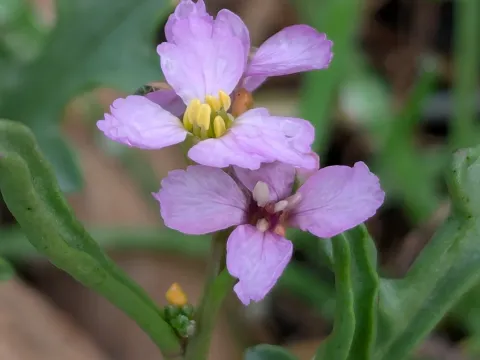
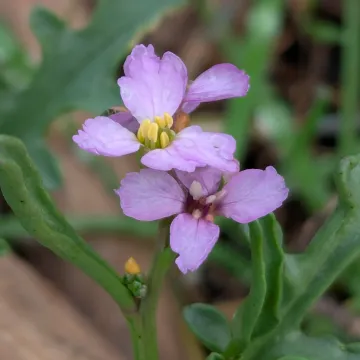
Botanically, Cakile maritima features succulent, pinnatifid leaves and a branching habit, typically growing to a height of 20 to 50 centimeters. The plant produces small, fragrant flowers ranging in color from white to pale purple. These characteristics not only facilitate pollination in windy coastal areas but also contribute to the plant's aesthetic appeal in various landscaping projects.
From an agrotechnical perspective, successful growth requires well-drained, sandy soil and full sun exposure. While the plant is inherently tolerant to saline conditions, proper soil management and minimal nutritional supplementation can significantly enhance biomass production. Seeds are uniquely adapted for sea dispersal, possessing buoyancy that allows them to travel long distances via ocean currents.
Economic potential of sea rocket lies in its use as a gourmet leafy green, known for its peppery, mustard-like flavor profile. Additionally, the plant contains essential oils with potential industrial applications. Growers should remain vigilant regarding common pests such as flea beetles and aphids, while also ensuring proper drainage to prevent fungal diseases related to root rot and mildew.
Photo gallery