
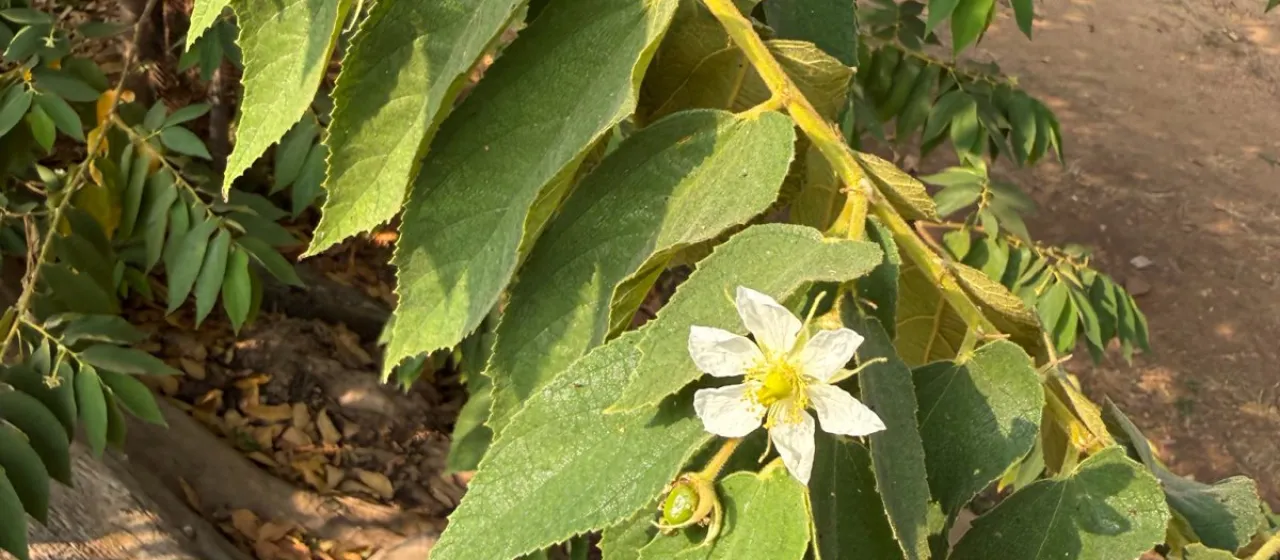
Description
The Calabur tree (Muntingia calabura L.) is a fast-growing tropical evergreen tree belonging to the Muntingiaceae family (now classified under Malvaceae). Widely known as the Jamaican cherry, strawberry tree, or Panama berry, it is highly valued for its sweet, aromatic, and nutrient-rich fruits.
Originally native to tropical America, extending from Mexico to South America, the species has successfully naturalized throughout the tropical regions of the world. Its ability to grow in poor soils and tolerate high heat makes it an excellent choice for reforestation and as a shade tree in agroforestry systems.
The tree exhibits a spreading canopy with soft, sticky, lanceolate leaves. It blooms throughout the year, producing white, star-shaped flowers that develop into small, round red berries. These fruits have a very soft texture and a distinctive sweet flavor that makes them popular for local consumption.
Cultivation requires full sun exposure and well-drained, fertile soil. While the tree is drought-tolerant once established, optimal production is achieved with consistent moisture. It is highly frost-sensitive and thrives best in zones where temperatures remain consistently warm throughout the year, as even light frost can damage branches.
Beyond fruit production, the Calabur tree is utilized for its fibrous bark, which is used to make cordage. Its leaves are frequently used in traditional medicine to create infusions, which are being studied for their potential health benefits. Because the tree is rarely affected by major pests or diseases, it is an ideal candidate for low-input tropical orchard management.