Parnassia-leaved water plantain
Caldesia parnassifolia
Description
Caldesia parnassifolia, commonly known as the Parnassia-leaved water plantain, is a rare perennial aquatic plant belonging to the Alismataceae family. As a relic species, it provides critical insights into botanical history and is often used by researchers to assess the health of wetland ecosystems.
The geographic distribution of this species spans across temperate and tropical regions of Eurasia, Africa, and Australia. It thrives primarily in stagnant or slow-moving shallow waters, such as ponds, marshes, and lake margins, where the substrate consists of nutrient-rich, soft silt or mud.
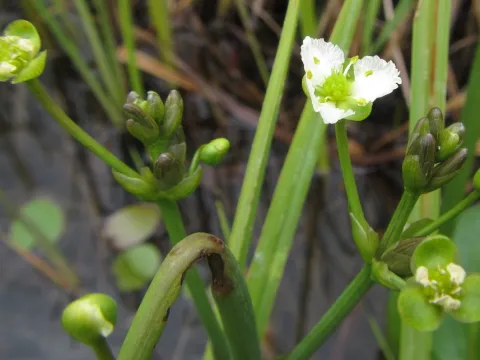
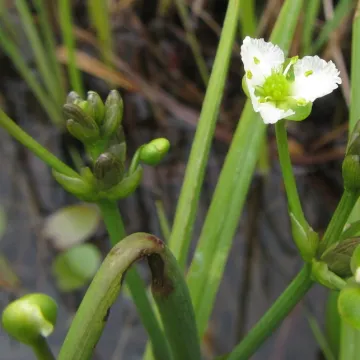
Botanically, the plant is characterized by floating, heart-shaped leaves on long petioles and elegant, pyramid-shaped panicles of small, white flowers. The species possesses a relatively fragile root system, which necessitates a stable environment free from rapid water level fluctuations or high wave action that could dislodge the plants.
Agrotechnical requirements for cultivation focus on strict water quality management. Successful growth depends on neutral to slightly acidic conditions, adequate solar radiation, and stable temperatures between 18°C and 24°C. The water must remain relatively clear to prevent excessive competition from algae, which can quickly shade out the developing plantlets.
While not a commercial agricultural commodity, the plant has significance in ornamental pond management and ecological restoration efforts. The primary challenges in maintaining healthy populations include chemical pollution from agricultural runoff and the susceptibility to fungal pathogens when water circulation is poor. Conservation status remains a priority due to the global decline of its natural wetland habitats.
Photo gallery