Calepina irregularis
Calepina irregularis
Description
Calepina irregularis, commonly known as white ballmustard, is an annual herbaceous plant belonging to the Brassicaceae family. While it is not a widely cultivated crop, it is a significant species in agronomy due to its status as a persistent weed that competes with essential crops for soil nutrients, sunlight, and moisture.
The plant originates from the Mediterranean basin and Western Asia. Over time, it has established itself across Europe and various parts of the world, including North America. It thrives in temperate climates and is typically found in disturbed habitats such as arable land, meadows, and along roadsides, showing a strong preference for calcareous and loamy soils.
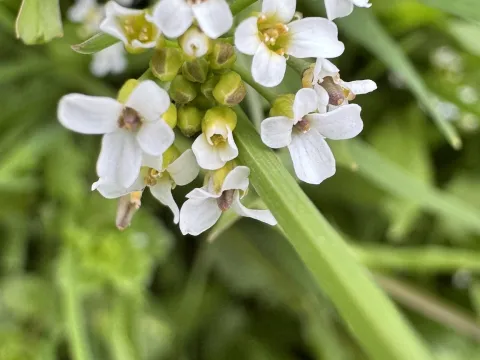
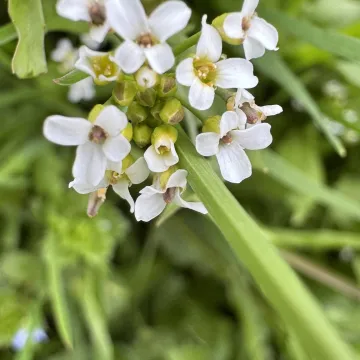
Morphologically, Calepina irregularis grows up to 50 centimeters in height. It features a basal rosette of leaves and a slender, branching stem. The flowers are small, white, and organized in terminal racemes, eventually producing distinctive, indehiscent, reticulated pods containing a single seed. This seed structure is highly adapted for dispersal by wind and agricultural machinery.
Agronomic management of this species focuses on preventive measures and mechanical control. Since it behaves as a winter annual, early spring cultivation is vital for destroying young rosettes before they reach the flowering stage. Crop rotation with non-brassica species is an effective biological strategy to break the life cycle of this weed and reduce its seed bank in the soil.
- Monitor fields during early spring for rosette development.
- Use herbicides effective against cruciferous weeds in pre-emergent phases.
- Ensure equipment is cleaned to prevent seed transport between fields.
In terms of biotic stress, this plant is susceptible to common Brassicaceae pathogens like clubroot (Plasmodiophora brassicae) and downy mildew. Furthermore, it acts as a host for pests such as flea beetles and aphids. Due to its potential to harbor diseases that affect canola and mustard crops, maintaining low populations of Calepina irregularis is essential for integrated pest management in commercial farming.
Photo gallery