Spiny broom
Calicotome spinosa (L.) Link
Description
Spiny broom (Calicotome spinosa) is a perennial, spiny shrub belonging to the Fabaceae family. It is a highly resilient plant native to the Mediterranean basin, widely recognized for its ability to thrive in poor, rocky, and arid environments where other vegetation often fails.
The distribution range of this species primarily covers Western Mediterranean countries, including Southern Europe and parts of Northern Africa. It naturally inhabits calcareous soils and rocky slopes, demonstrating an exceptional adaptation to long periods of drought, which is a signature characteristic of the Mediterranean climate.
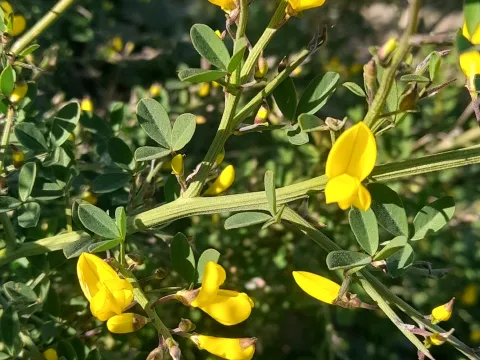
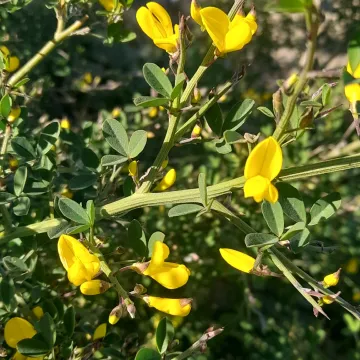
Botanically, Calicotome spinosa is characterized by dense, intricate branching with branches modified into sharp thorns. Its leaves are small, trifoliate, and often deciduous during the peak of summer. The plant produces vibrant yellow, pea-like flowers during the spring, which are essential for its role as an early-season nectar source.
Regarding cultivation and agronomy, the spiny broom requires minimal intervention. It thrives in full sunlight and well-drained soils. Its ability to fix atmospheric nitrogen, common to legumes, helps it enrich the soil around its root zone, making it a valuable plant for soil restoration and stabilization in degraded agricultural landscapes.
In terms of хозяйственное (economic) utility, this shrub is mainly utilized for slope stabilization to prevent erosion and as a natural living fence. Because of its thorns, it is not considered a primary fodder crop, but its flowers are highly sought after by beekeepers, contributing to honey production in early spring.
Common phytosanitary issues include root rot, which typically occurs only in waterlogged soils, and occasional infestations by aphids. Management strategies focus on maintaining proper aeration of the soil and periodic pruning to prevent the shrub from becoming too dense or encroaching on neighboring cultivation zones.
Photo gallery