Calligonum polygonoides
Calligonum polygonoides
Description
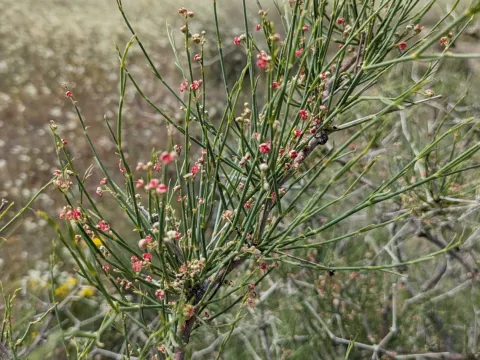
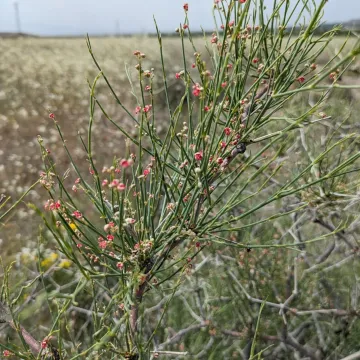
Calligonum polygonoides is a perennial shrub belonging to the Polygonaceae family. This species is widely recognized for its remarkable adaptation to hyper-arid environments, acting as a pioneer species in the stabilization of shifting sand dunes in desert landscapes throughout Western and Central Asia.
The geographic range of this plant includes regions across India, Pakistan, Afghanistan, and Iran. It thrives in sandy, nutrient-poor soils where moisture availability is extremely limited. Its ability to tolerate severe water stress makes it an essential component of desert ecosystems and local agricultural systems.
Botanically, Calligonum polygonoides is characterized by its deep, extensive root system, which allows it to reach stable moisture layers deep underground. The plant has reduced leaves or specialized twigs that perform photosynthesis, an evolutionary strategy to minimize water loss. It typically grows as a dense, much-branched bush, often reaching heights of 1.5 to 2 meters.
Regarding cultivation, the plant is primarily propagated through seeds. Successful establishment requires planting in sandy textures where the soil surface is not subject to frequent waterlogging. As a desert-adapted crop, it requires minimal agronomic intervention, focusing mainly on the initial protection of seedlings from overgrazing and trampling in newly reforested areas.
The economic value of this culture is diverse and vital for arid regions:
- Effective stabilization of sand dunes to prevent desertification.
- Provision of essential green forage for livestock, particularly camels and goats.
- Utilization of dry, woody stems for fuel in remote desert communities.
- Contribution to regional biodiversity by providing habitats in hostile conditions.
The plant demonstrates high resistance to common crop diseases. While some specialized insects may feed on its tissues, these pests rarely reach economic damage thresholds. Proper management and sustainable grazing practices are the only necessary components to ensure the long-term viability of Calligonum polygonoides stands.
Photo gallery