Common water-starwort
Callitriche platycarpa
Description
Common water-starwort (Latin: Callitriche platycarpa) is an aquatic herbaceous plant belonging to the Plantaginaceae family. In an agricultural and horticultural context, it is highly valued for its role in maintaining water quality and providing oxygenation in both natural and artificial aquatic systems.
This species is native to European regions, where it has adapted to a wide range of climates. It typically thrives in shallow, slow-moving, or stagnant freshwater habitats, making it a reliable choice for pond landscaping and managed aquatic environments across various temperate zones.
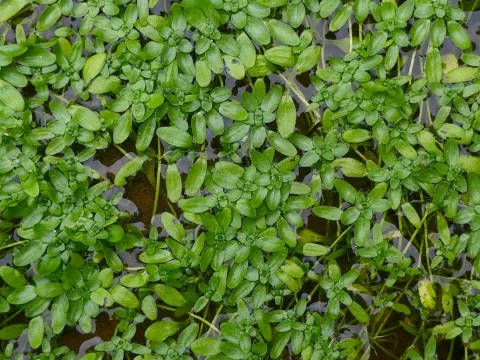
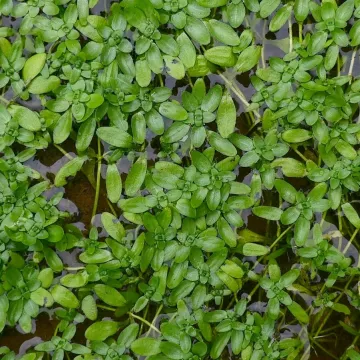
Botanically, Callitriche platycarpa is characterized by its dimorphic foliage, featuring delicate submerged leaves and characteristic floating rosettes. Its growth habit is relatively rapid during the peak of the growing season, allowing it to quickly establish dense mats that serve as essential habitat for aquatic fauna.
Cultivation requirements involve consistent water levels and sufficient light exposure. While it is not demanding in terms of soil nutrients, it grows best in substrates rich in organic detritus. Standard agro-technical practices include occasional thinning to prevent the plant from overtaking small ponds or water features.
The practical application of this species is primarily focused on aesthetic pond design and biological water purification. It acts as a nutrient sink, absorbing excess nitrates and phosphates. While generally robust, the crop can be sensitive to severe water pollution, which may inhibit growth or attract secondary fungal pathogens.
- Family: Plantaginaceae
- Life cycle: Perennial aquatic
- Optimal light: Full sun to partial shade
- Substrate: Silty or sandy bottom
- Common pests: Snails and water-based larvae
Photo gallery