Incense cedar
Calocedrus decurrens (Torr.) Florin
Description
The Incense cedar (Calocedrus decurrens) is a prominent evergreen coniferous tree belonging to the Cypress family (Cupressaceae). Known for its distinctive columnar silhouette, this tree is both a significant component of western North American forests and a popular choice for large-scale landscaping and ornamental gardening worldwide.
Native to the western United States, particularly the mountains of California and Oregon, this species thrives in climates characterized by distinct seasons. It generally grows at middle elevations, preferring slopes where moisture availability is consistent. Its ability to adapt to varied environmental conditions makes it a resilient candidate for cultivation in similar temperate climate zones.
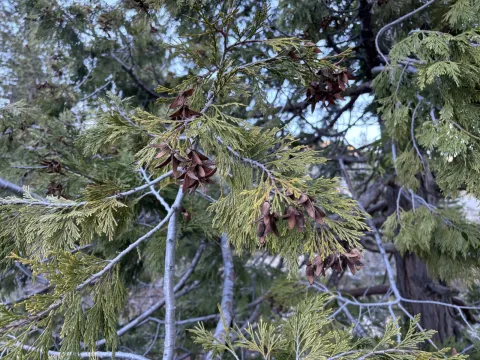
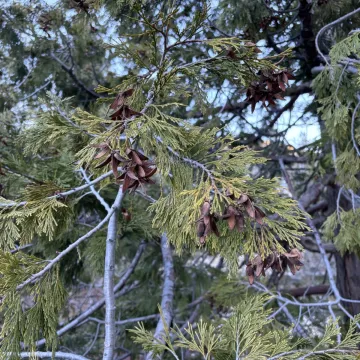
Botanically, the tree is recognized by its flattened, scale-like leaves that are arranged in whorls of four along the branches. The bark is a key identification feature: it is thick, fibrous, and reddish-brown, which provides excellent protection against wildfires. The tree produces small, oblong cones that turn from green to brown as they mature and release seeds during the late autumn period.
In terms of agricultural and horticultural requirements, the Incense cedar prefers deep, well-draining soils with a neutral to slightly acidic pH. While it is tolerant of various soil types, poor drainage can lead to root rot. Successful cultivation involves regular, deep watering during the establishment phase and providing ample space for the tree to reach its full vertical potential without overcrowding.
Economically, the wood of the Incense cedar is highly regarded for its aromatic properties, soft texture, and natural resistance to decay. These characteristics have made it the primary material for high-quality pencil manufacturing. In a landscape setting, it serves as a robust windbreak and a sculptural element, providing year-round greenery and structure to expansive garden spaces.
- Requires minimal pruning to maintain its natural columnar shape.
- Prefers full sun to partial shade for optimal growth rates.
- Relatively resistant to major pests, though occasionally affected by mistletoe.
- Requires mulching to maintain soil moisture during the first few growing seasons.
Photo gallery