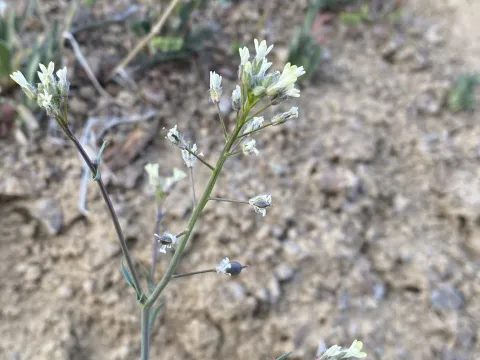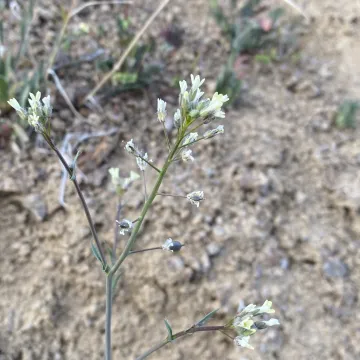
Rumelian false flax
Camelina rumelica
Description
Rumelian false flax (lat. Camelina rumelica) is an annual herbaceous plant belonging to the Brassicaceae family. Recognized for its hardiness, this crop is increasingly valued in modern agriculture as a drought-tolerant oilseed source capable of thriving in marginal soils.
Native to Southeast Europe and Western Asia, this species has successfully adapted to the arid steppe environments. Unlike some traditional crops, it can maintain stable productivity even when water resources are limited, making it an excellent candidate for sustainable farming practices in changing climates.
Botanically, Camelina rumelica features an upright, branched stem with lanceolate leaves and produces small, oily seeds within its pods. The plant's lifecycle is relatively short, which allows growers to harvest early, avoiding the peak heat of the summer and maximizing the utilization of available spring moisture.
Regarding agrotechnical requirements, the crop favors well-drained soils but demonstrates remarkable adaptability. Key management practices include early spring sowing to ensure proper establishment. Due to its natural resistance to many common Brassicaceae pests and diseases, the crop typically requires minimal chemical input, which helps reduce production costs.
The economic value of this crop is primarily found in its oil content, which is rich in polyunsaturated fatty acids. Additionally, the leftover meal is a high-quality protein supplement for livestock feed. Its potential as a source for bio-based lubricants and renewable fuels makes it a crop of interest for both the food and industrial energy sectors.
Photo gallery